
Search
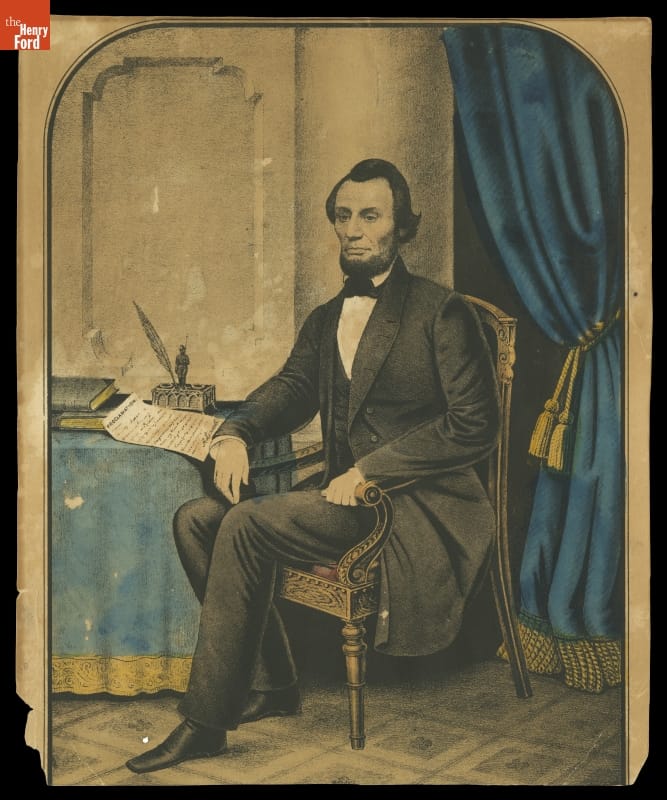
- Print, Abraham Lincoln with the Emancipation Proclamation, 1863 - Following the American Civil War, this print commemorated a crucial event and became popular for home and classroom display across the country. President Lincoln is shown in this hand colored lithograph with a draft of the Emancipation Proclamation. Publicly announced by Lincoln in September 1862 to become law on January 1, 1863, it was the essential first legal step in eliminating slavery.
- 1863
- Collections - Artifact
Print, Abraham Lincoln with the Emancipation Proclamation, 1863
Following the American Civil War, this print commemorated a crucial event and became popular for home and classroom display across the country. President Lincoln is shown in this hand colored lithograph with a draft of the Emancipation Proclamation. Publicly announced by Lincoln in September 1862 to become law on January 1, 1863, it was the essential first legal step in eliminating slavery.
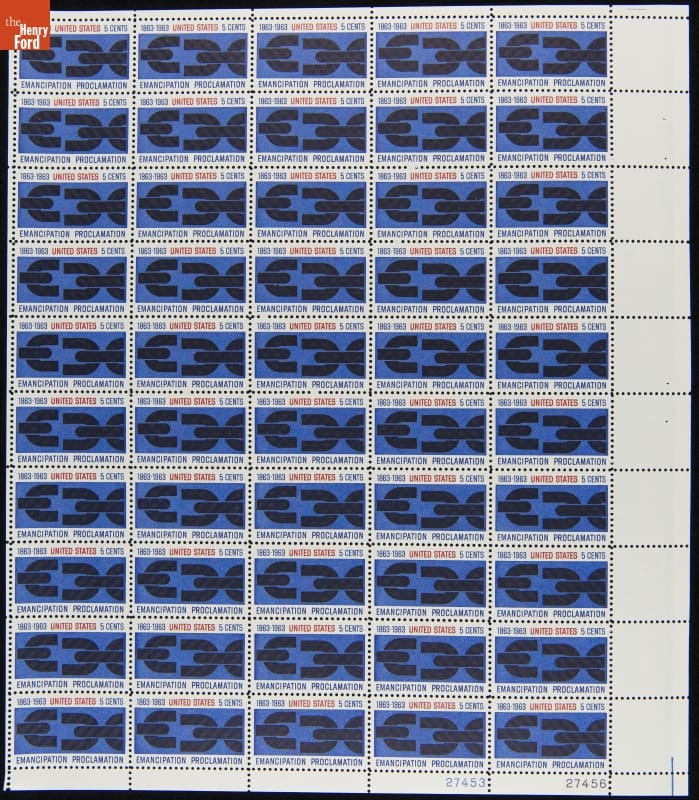
- U.S. Postage Stamps, Emancipation Proclamation 100th Anniversary Issue, 1963 -
- 1963
- Collections - Artifact
U.S. Postage Stamps, Emancipation Proclamation 100th Anniversary Issue, 1963
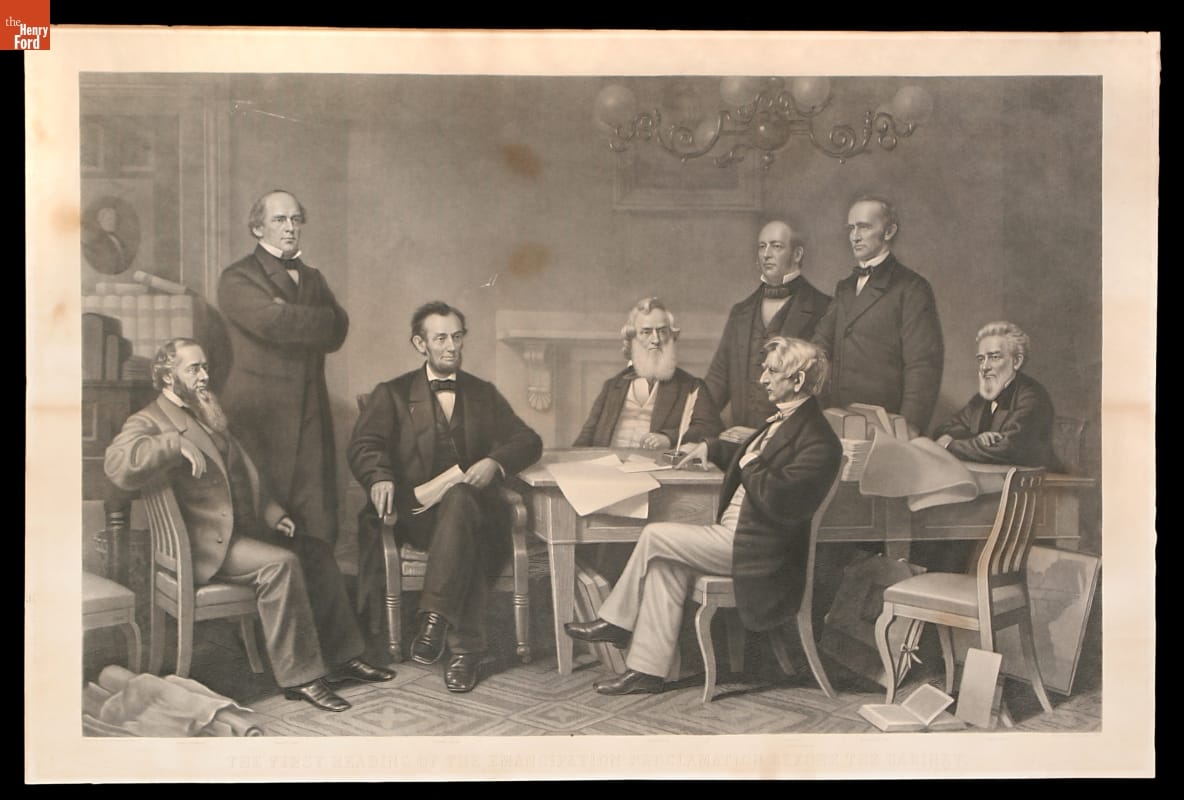
- Engraving, "The First Reading of the Emancipation Proclamation Before the Cabinet" 1866 - Following the American Civil War, this engraving commemorated a crucial event and became popular for classroom display across the country. On July 22, 1862, President Abraham Lincoln first read the Emancipation Proclamation to his cabinet officers. Publicly announced by Lincoln in September 1862 to become law on January 1, 1863, it was the essential first legal step in eliminating slavery.
- 1862
- Collections - Artifact
Engraving, "The First Reading of the Emancipation Proclamation Before the Cabinet" 1866
Following the American Civil War, this engraving commemorated a crucial event and became popular for classroom display across the country. On July 22, 1862, President Abraham Lincoln first read the Emancipation Proclamation to his cabinet officers. Publicly announced by Lincoln in September 1862 to become law on January 1, 1863, it was the essential first legal step in eliminating slavery.
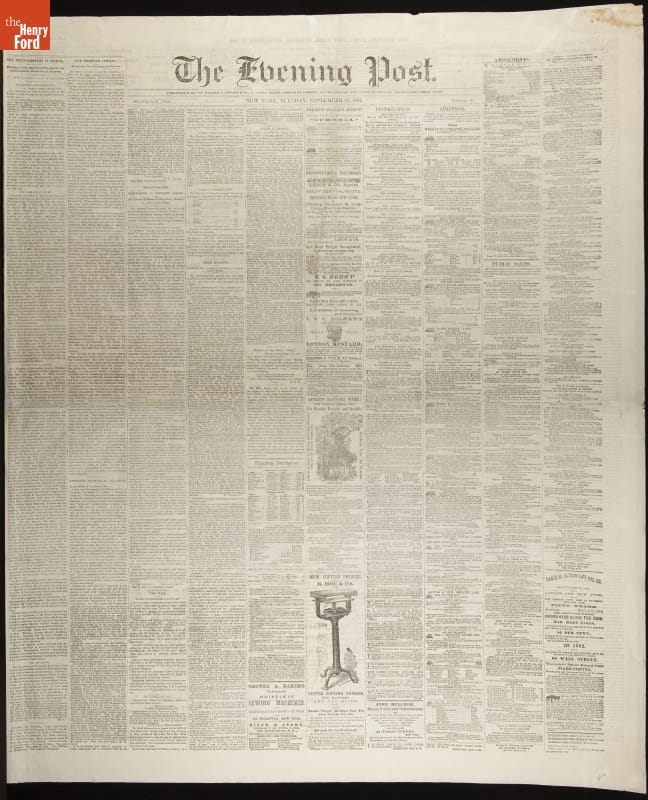
- New York Evening Post Newspaper for September 23, 1862, "Emancipation Proclamation of President Lincoln" -
- September 23, 1862
- Collections - Artifact
New York Evening Post Newspaper for September 23, 1862, "Emancipation Proclamation of President Lincoln"
- Selma / Dallas County Emancipation Proclamation Commitee Freedom Warrior Award Presented to Richie Jean Jackson -
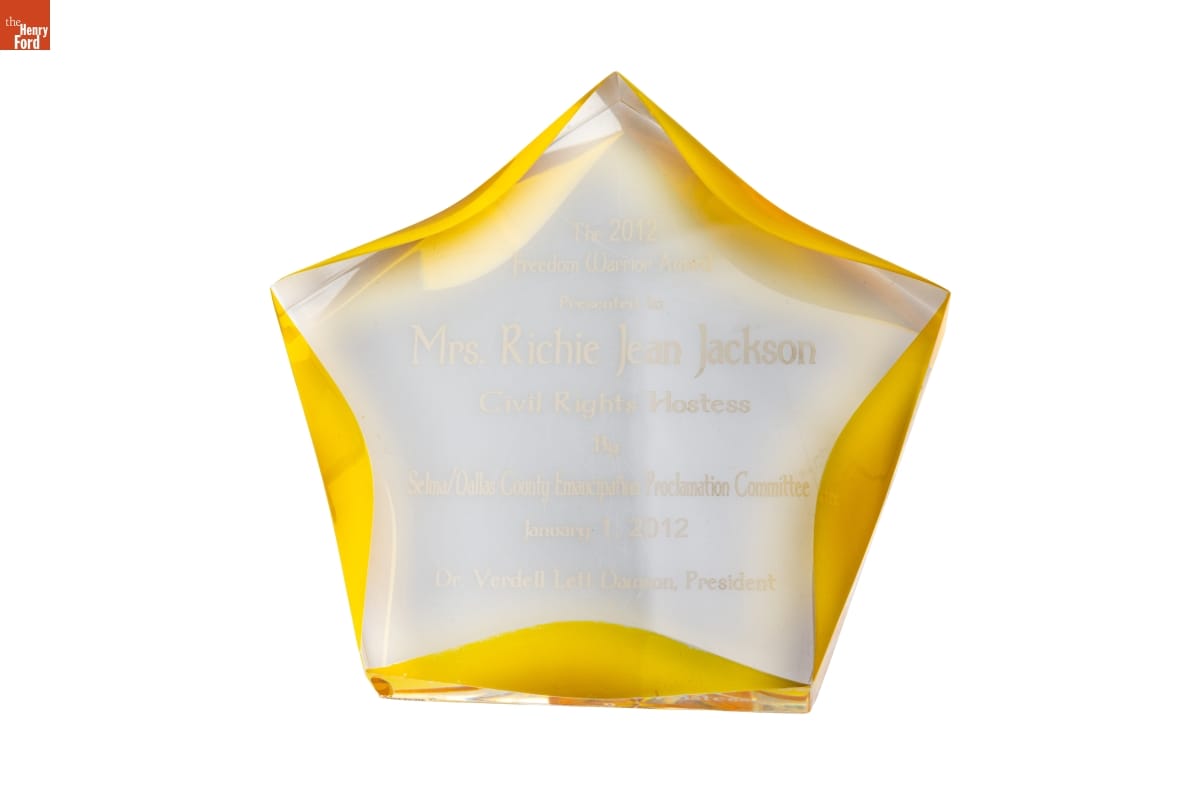
- January 01, 2012
- Collections - Artifact
Selma / Dallas County Emancipation Proclamation Commitee Freedom Warrior Award Presented to Richie Jean Jackson
- Engraving, Portrait of Abraham Lincoln, 1864 - During the American Civil War, this print commemorated a crucial event and became popular for home and classroom display across the country. President Lincoln is shown in this engraving with a draft of the Emancipation Proclamation. Publicly announced by Lincoln in September 1862 to become law on January 1, 1863, it was the essential first legal step in eliminating slavery.
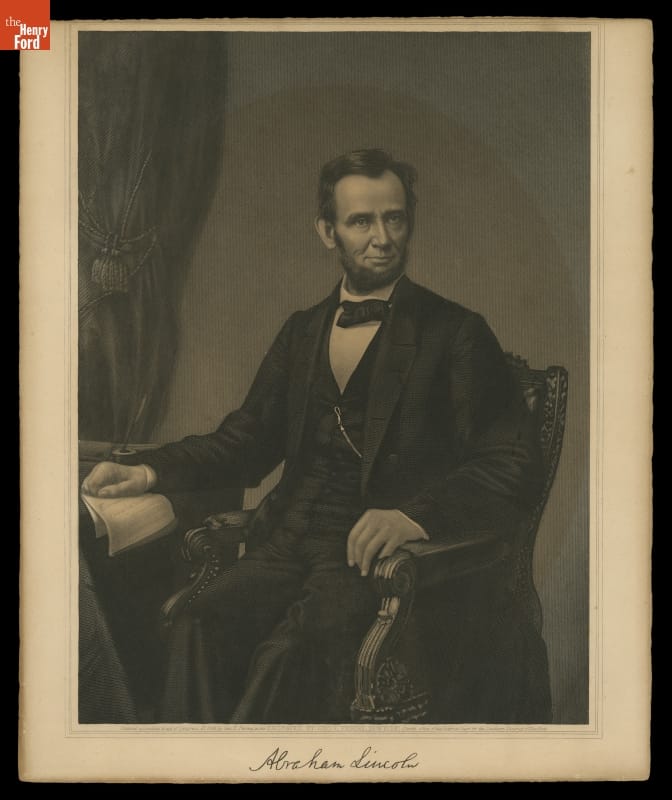
- January 01, 1863
- Collections - Artifact
Engraving, Portrait of Abraham Lincoln, 1864
During the American Civil War, this print commemorated a crucial event and became popular for home and classroom display across the country. President Lincoln is shown in this engraving with a draft of the Emancipation Proclamation. Publicly announced by Lincoln in September 1862 to become law on January 1, 1863, it was the essential first legal step in eliminating slavery.
- Emancipation Day, Richmond, Virginia, April 3, 1905 - Until Union troops arrived, the Emancipation Proclamation meant little to most slaves in the Confederate States of America. For African Americans living in Richmond, Virginia, the day of Emancipation came on April 3, 1865. The event continued to be celebrated annually on that day into the 20th century. This photograph shows the celebration in 1905, 40 years after the war ended.
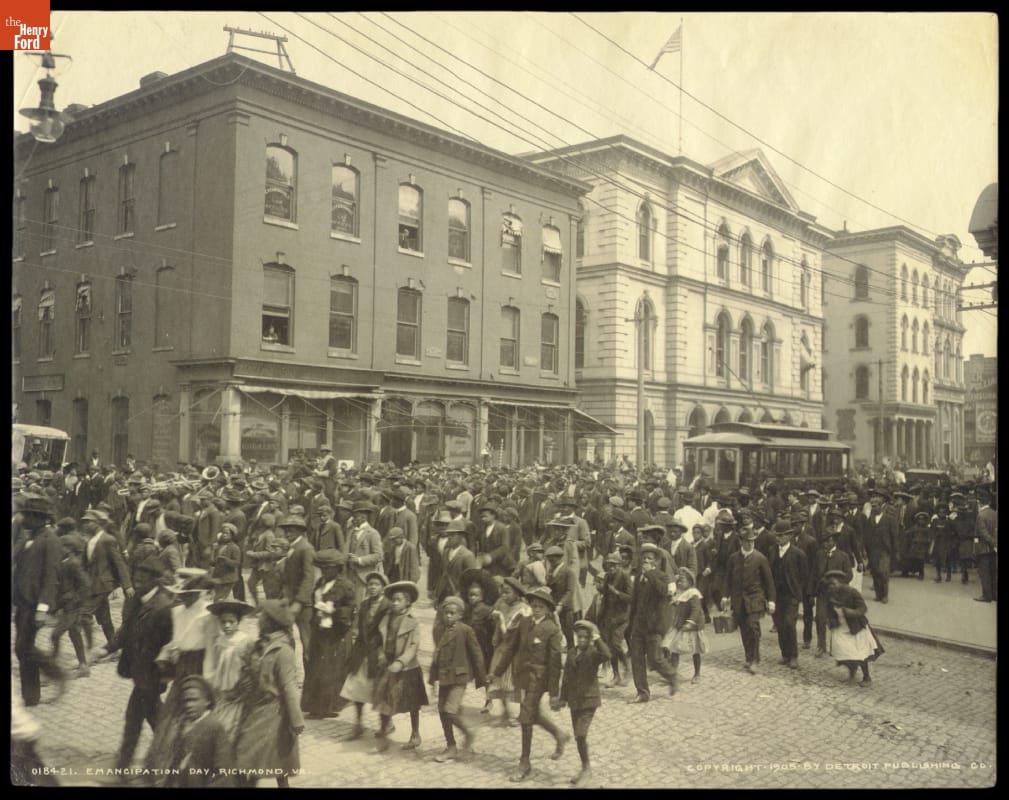
- April 03, 1905
- Collections - Artifact
Emancipation Day, Richmond, Virginia, April 3, 1905
Until Union troops arrived, the Emancipation Proclamation meant little to most slaves in the Confederate States of America. For African Americans living in Richmond, Virginia, the day of Emancipation came on April 3, 1865. The event continued to be celebrated annually on that day into the 20th century. This photograph shows the celebration in 1905, 40 years after the war ended.
- Juneteenth at Greenfield Village: Celebrating Emancipation - From the very beginning of emancipation all the way to modern Juneteenth parties, food has always been an important part of celebrations. For Emancipation Day, families and communities would come together to enjoy the food, taking the day to picnic.

- June 12, 2024
- Collections - article
Juneteenth at Greenfield Village: Celebrating Emancipation
From the very beginning of emancipation all the way to modern Juneteenth parties, food has always been an important part of celebrations. For Emancipation Day, families and communities would come together to enjoy the food, taking the day to picnic.
- Abraham Lincoln: Preserving the Union - Following the American Civil War, this engraving commemorated a crucial event and became popular for classroom display across the country. On July 22, 1862, President Abraham Lincoln first read the Emancipation Proclamation to his cabinet officers. Publicly announced by Lincoln in September 1862 to become law on January 1, 1863, it was the essential first legal step in eliminating slavery.
- October 16, 2015
- Collections - Set
Abraham Lincoln: Preserving the Union
Following the American Civil War, this engraving commemorated a crucial event and became popular for classroom display across the country. On July 22, 1862, President Abraham Lincoln first read the Emancipation Proclamation to his cabinet officers. Publicly announced by Lincoln in September 1862 to become law on January 1, 1863, it was the essential first legal step in eliminating slavery.
- Button, "Emancipation March on Washington," 1963 - More than 250,000 civil rights advocates showed up at this peaceful march to support unity, jobs, and a new Civil Rights bill being proposed by President Kennedy. Television viewers nationwide watched African Americans and whites march together, united behind a common cause. Songs and speeches at this march included Martin Luther King, Jr.'s famous "I Have a Dream" speech.
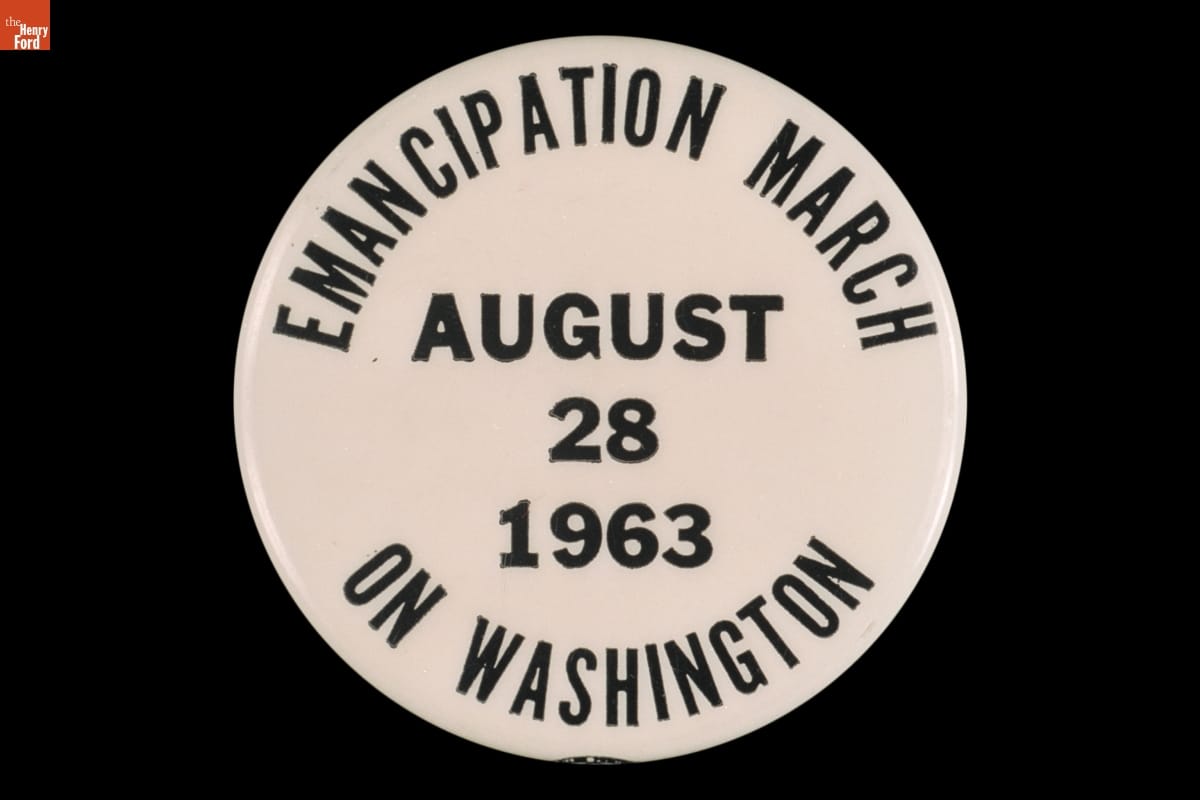
- August 28, 1963
- Collections - Artifact
Button, "Emancipation March on Washington," 1963
More than 250,000 civil rights advocates showed up at this peaceful march to support unity, jobs, and a new Civil Rights bill being proposed by President Kennedy. Television viewers nationwide watched African Americans and whites march together, united behind a common cause. Songs and speeches at this march included Martin Luther King, Jr.'s famous "I Have a Dream" speech.