
Search
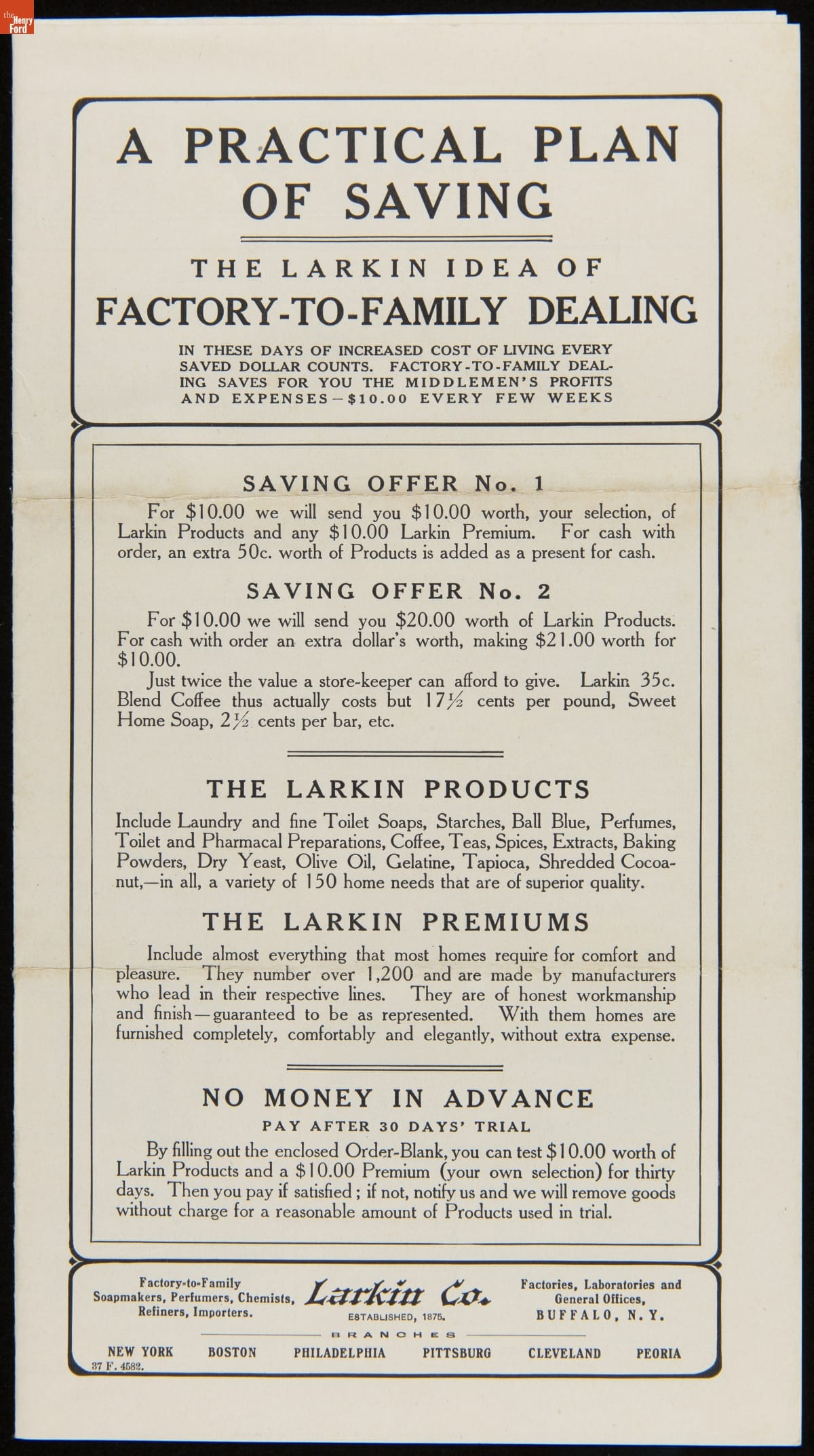
- Larkin Company Trade Catalog, "A Practical Plan of Saving: The Larkin Idea of Factory-To-Family Dealing," circa 1906 - John D. Larkin established a soap manufacturing company in 1875. He hired his brother-in-law, Elbert Hubbard, as a salesman. Hubbard developed "The Larkin Idea," a plan that sold goods directly to consumers through mail-order catalogs and offered incentivizing giveaways. It was a success. By the early 1900s, Larkin's catalogs contained pages of products and even more pages of premiums from which customers could choose.
- circa 1906
- Collections - Artifact
Larkin Company Trade Catalog, "A Practical Plan of Saving: The Larkin Idea of Factory-To-Family Dealing," circa 1906
John D. Larkin established a soap manufacturing company in 1875. He hired his brother-in-law, Elbert Hubbard, as a salesman. Hubbard developed "The Larkin Idea," a plan that sold goods directly to consumers through mail-order catalogs and offered incentivizing giveaways. It was a success. By the early 1900s, Larkin's catalogs contained pages of products and even more pages of premiums from which customers could choose.
- Kelvinator "Automatic Cook" Electric Range, circa 1950 -
- circa 1950
- Collections - Artifact
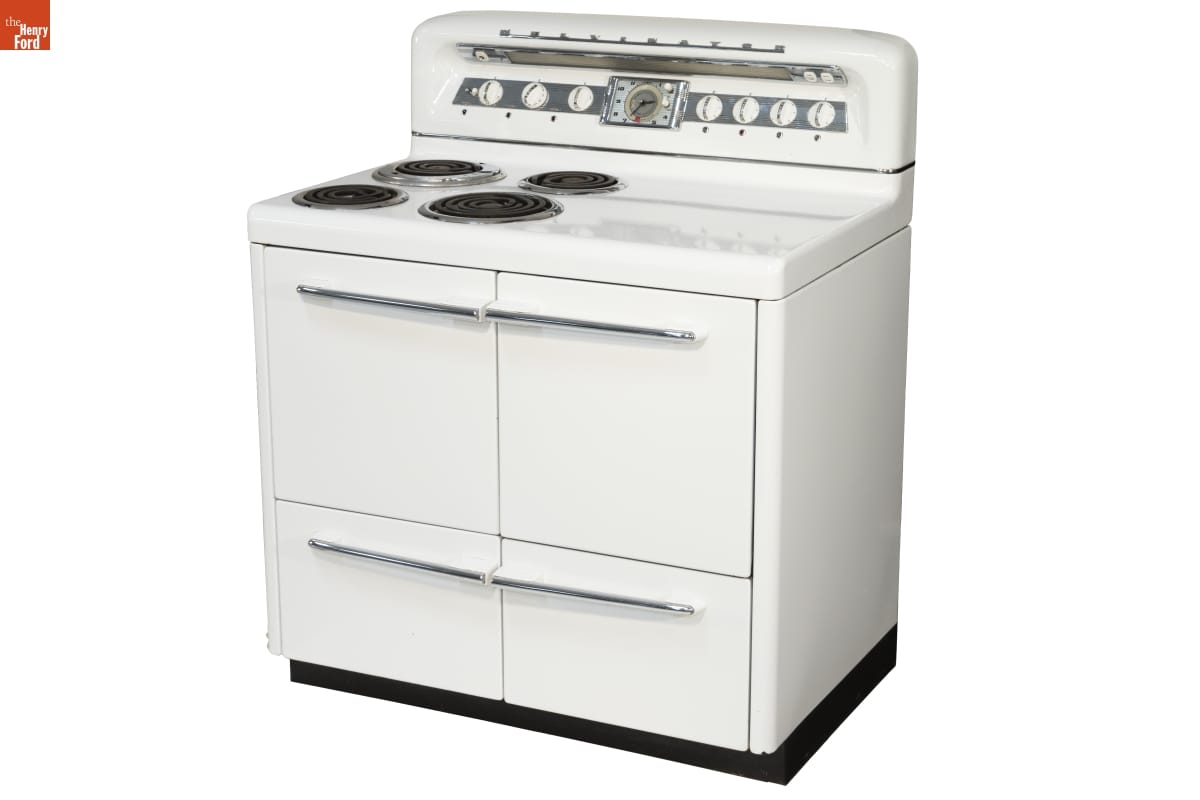
Kelvinator "Automatic Cook" Electric Range, circa 1950
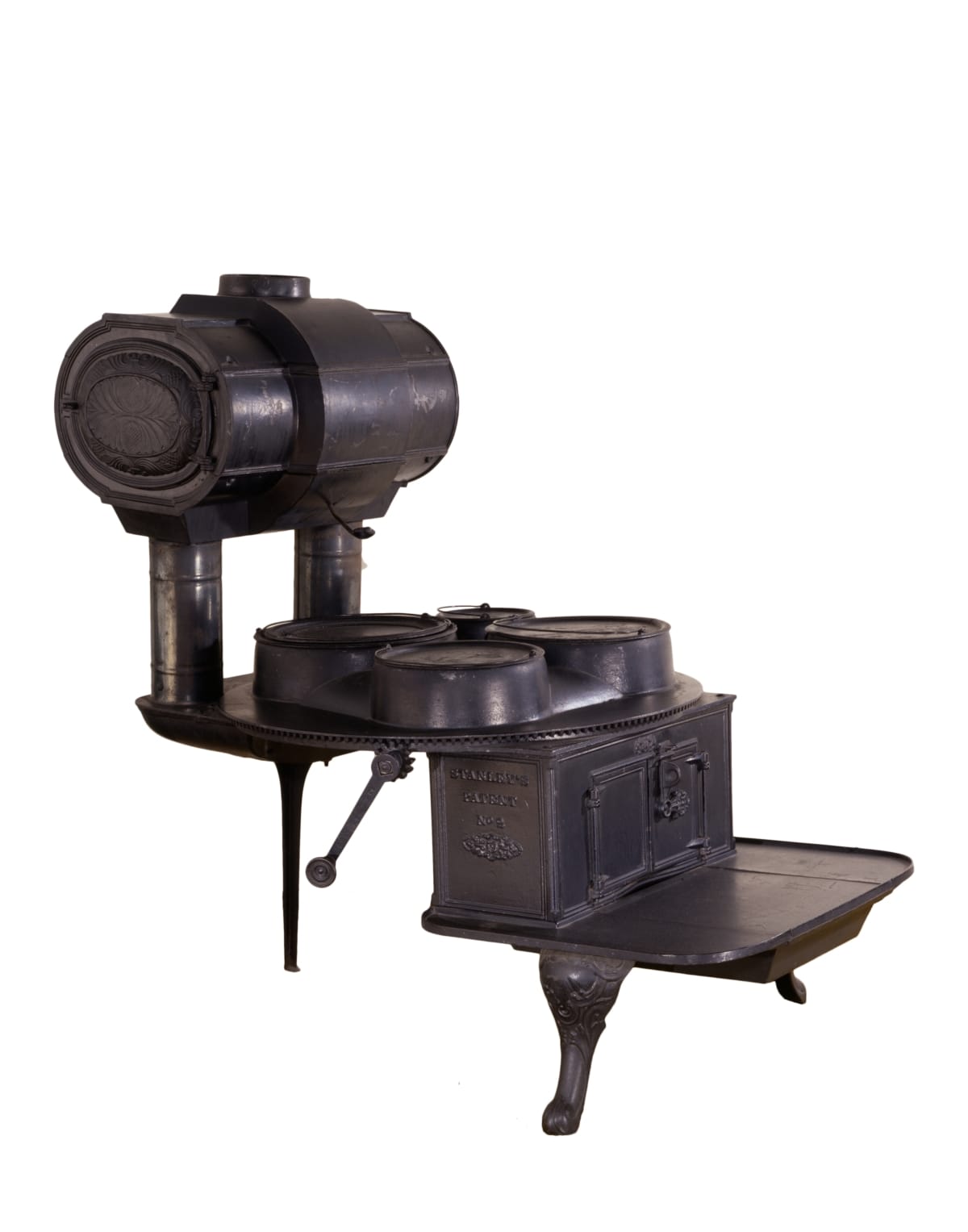
- Stanley Cookstove, 1832-1838 - When cooking in a fireplace, a woman could adeptly adjust cooking temperature by moving food closer to or farther away from the fire. Controlling heat distribution on early cast iron stoves proved a bigger challenge. Henry Stanley offered this solution: a cookstove with a revolving stovetop to rotate food directly over or away from the firebox.
- 1832-1838
- Collections - Artifact
Stanley Cookstove, 1832-1838
When cooking in a fireplace, a woman could adeptly adjust cooking temperature by moving food closer to or farther away from the fire. Controlling heat distribution on early cast iron stoves proved a bigger challenge. Henry Stanley offered this solution: a cookstove with a revolving stovetop to rotate food directly over or away from the firebox.
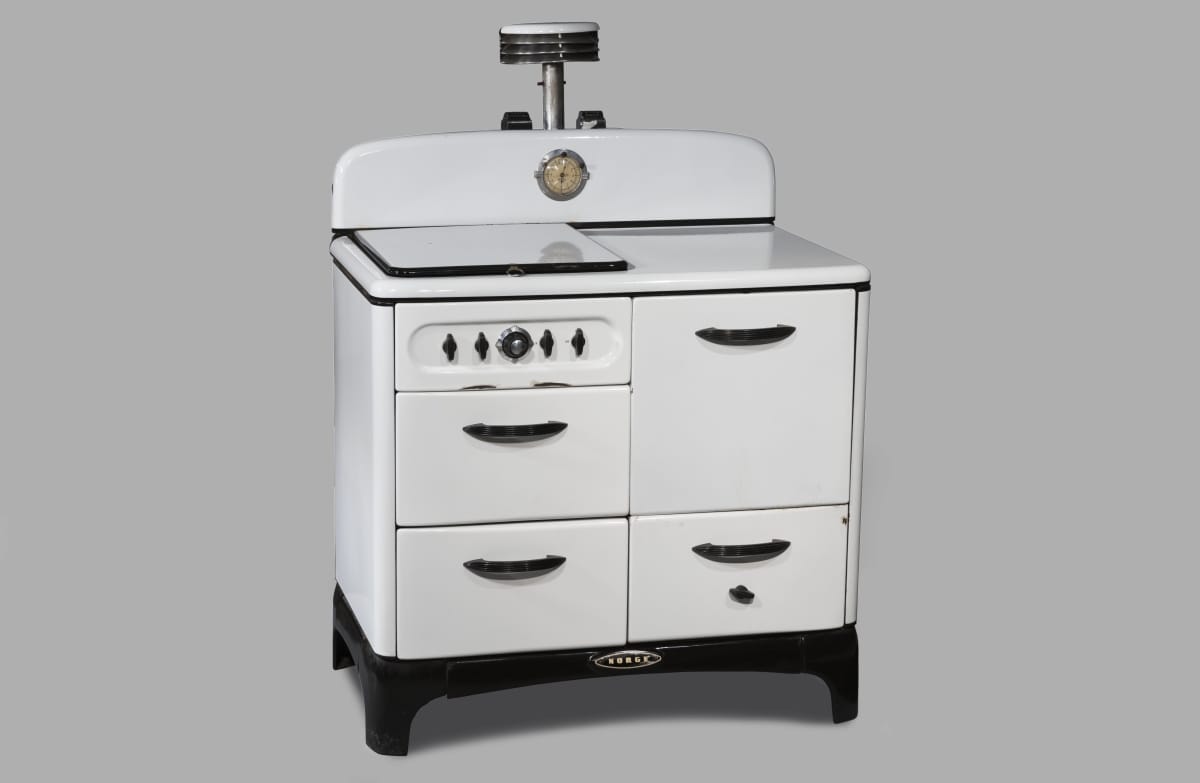
- Borg-Warner "Norge" Cookstove, 1935-1945 - This sleek range hid its technology behind a smooth porcelain enamel cabinet. Four surface burners could be covered when not in use, while doors neatly concealed the oven, warming oven, and broiler. By the mid-1930s, ranges like this one--lacking tall legs and with a stovetop designed to fit alongside built-in cupboards with continuous countertops--took their place in the standardized, modern kitchens of the era.
- 1935-1945
- Collections - Artifact
Borg-Warner "Norge" Cookstove, 1935-1945
This sleek range hid its technology behind a smooth porcelain enamel cabinet. Four surface burners could be covered when not in use, while doors neatly concealed the oven, warming oven, and broiler. By the mid-1930s, ranges like this one--lacking tall legs and with a stovetop designed to fit alongside built-in cupboards with continuous countertops--took their place in the standardized, modern kitchens of the era.
- Harvester No. 9 Step Stove, circa 1870 -
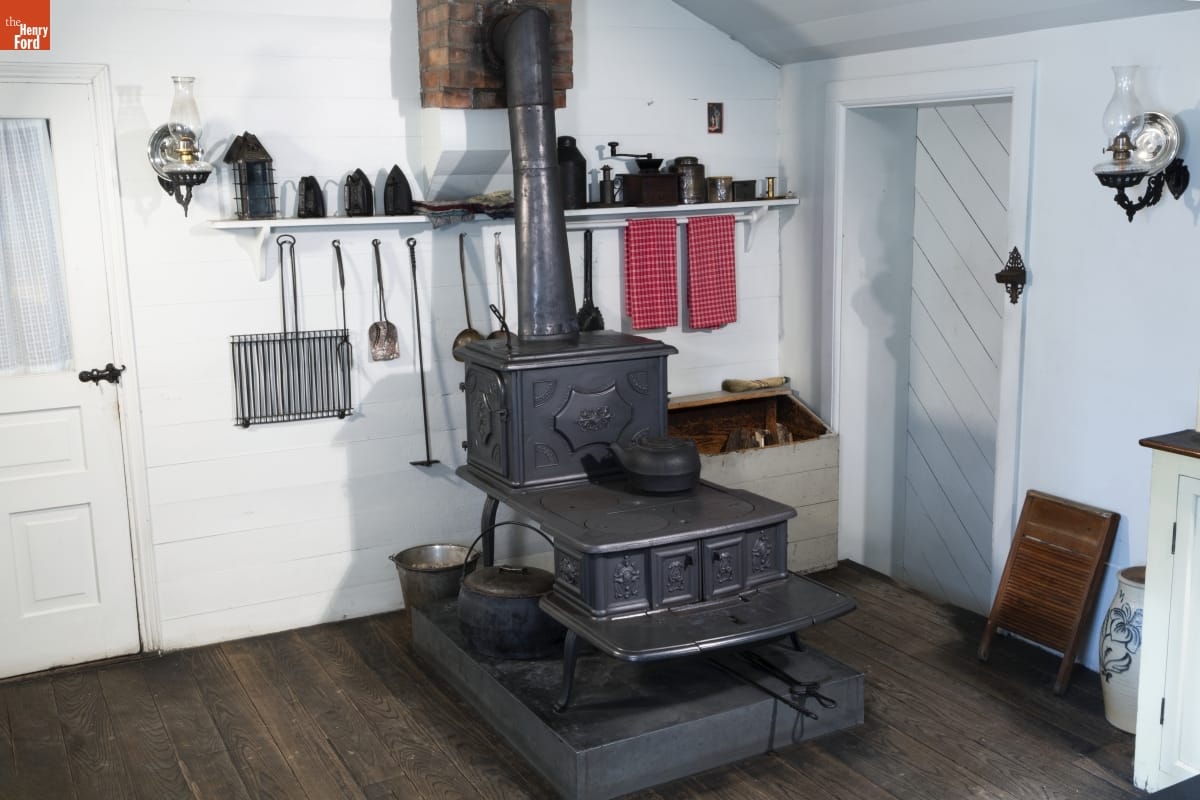
- circa 1870
- Collections - Artifact
Harvester No. 9 Step Stove, circa 1870
- Three-Burner Short Order Range, circa 1946 - This gas-fired three-burner stove was one of the "tools of the trade" for short-order cooks in diners and cafes of the mid-20th century. It came from an abandoned Worcester Lunch Car Company diner in Laconia, New Hampshire.
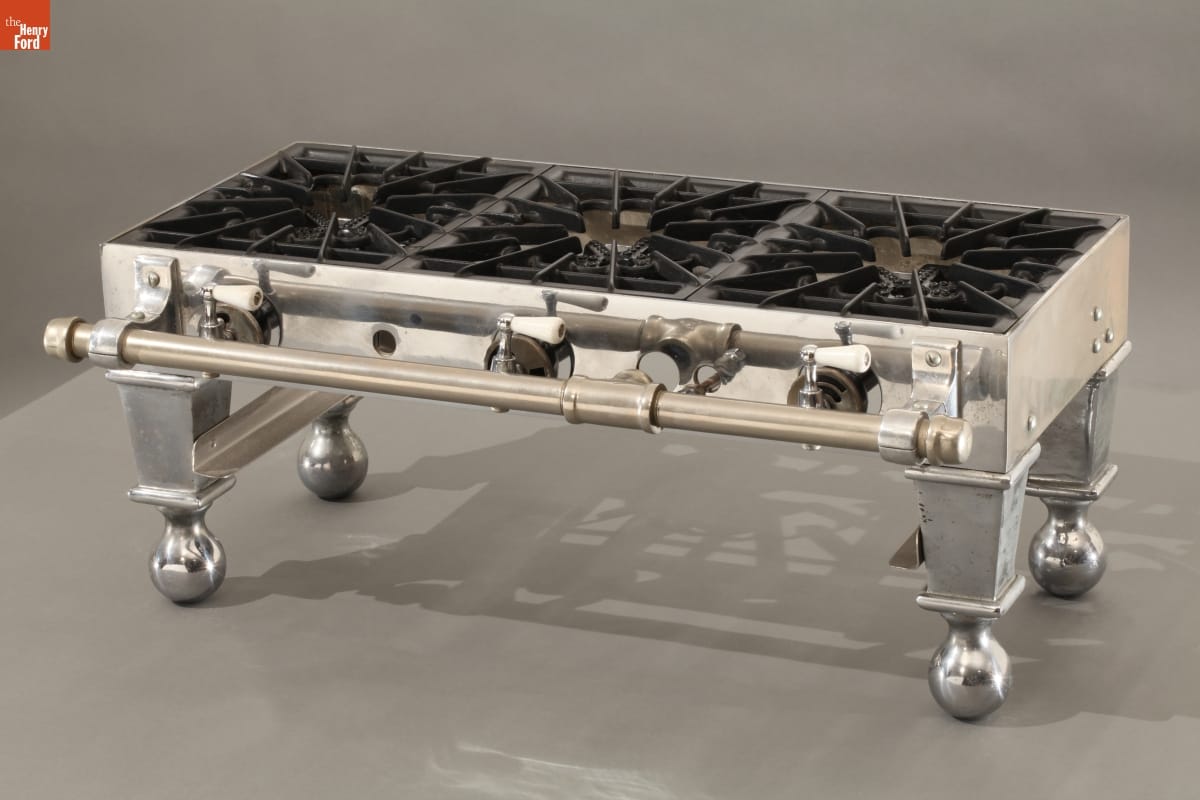
- circa 1946
- Collections - Artifact
Three-Burner Short Order Range, circa 1946
This gas-fired three-burner stove was one of the "tools of the trade" for short-order cooks in diners and cafes of the mid-20th century. It came from an abandoned Worcester Lunch Car Company diner in Laconia, New Hampshire.
- NuTone Series 1000-P Range Hood, circa 1960 -
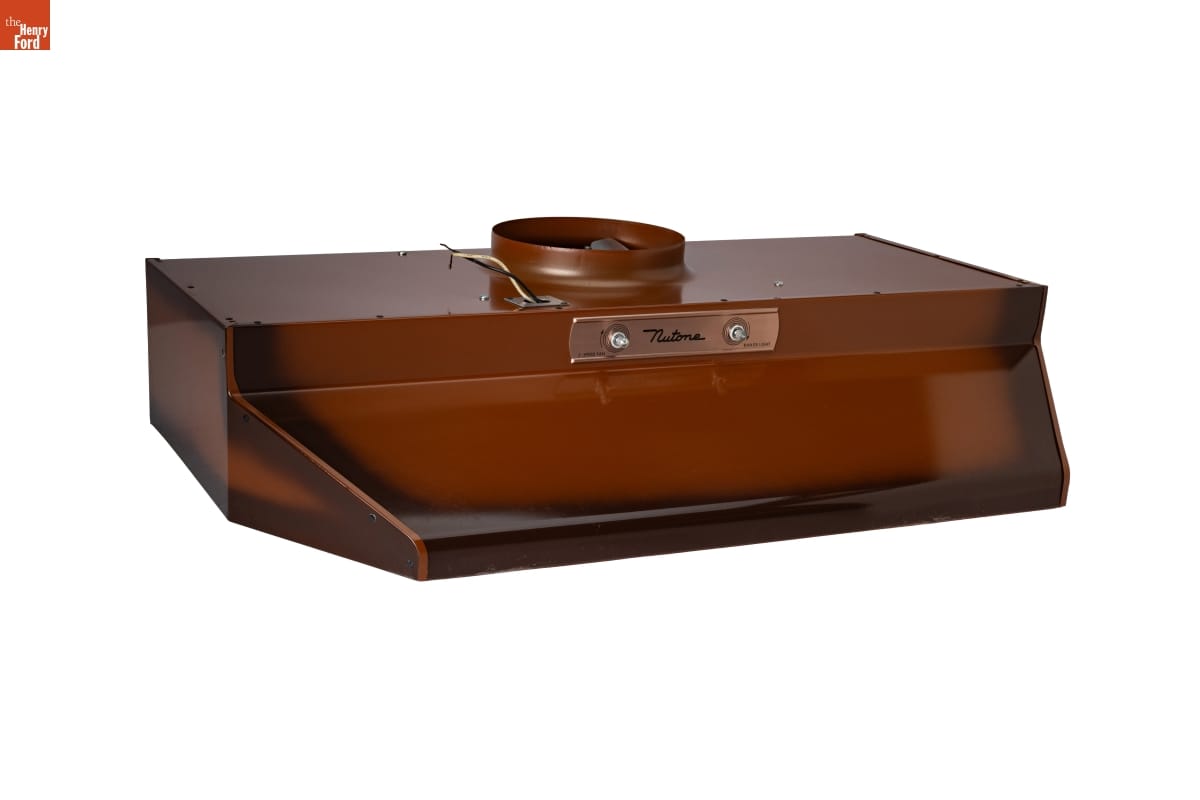
- circa 1960
- Collections - Artifact
NuTone Series 1000-P Range Hood, circa 1960
- Milwaukee Stove Company "Perfection" Gas Stove, 1882-1890 -
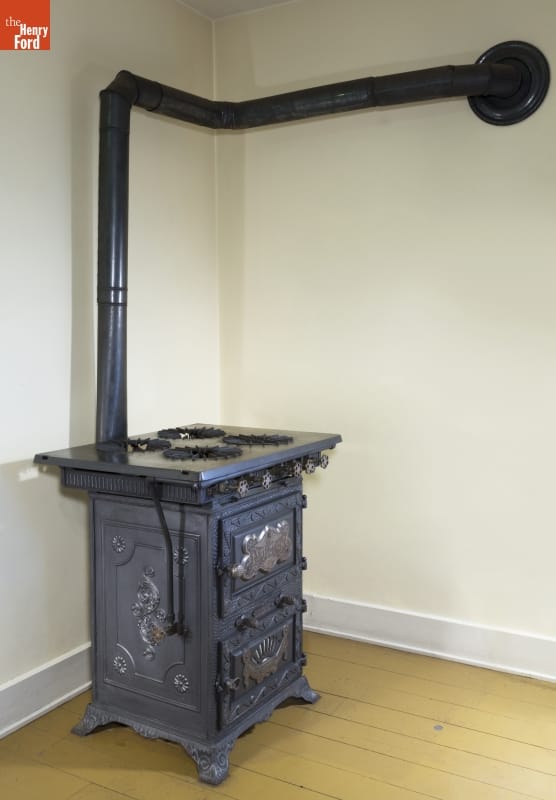
- 1882-1890
- Collections - Artifact
Milwaukee Stove Company "Perfection" Gas Stove, 1882-1890
- Armstrong Manufacturing Co. Table Stove, Used by Howard K. and Ruth Kinney Bidwell, 1923 -
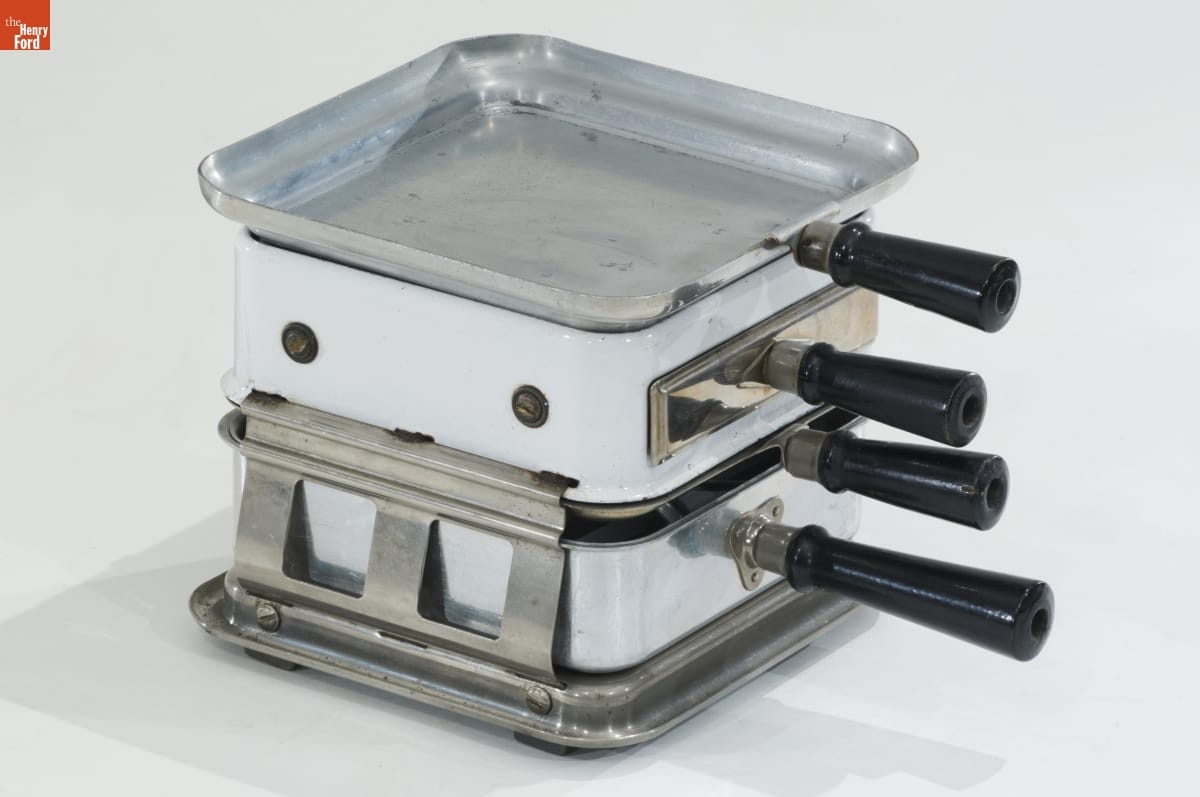
- 1923
- Collections - Artifact
Armstrong Manufacturing Co. Table Stove, Used by Howard K. and Ruth Kinney Bidwell, 1923
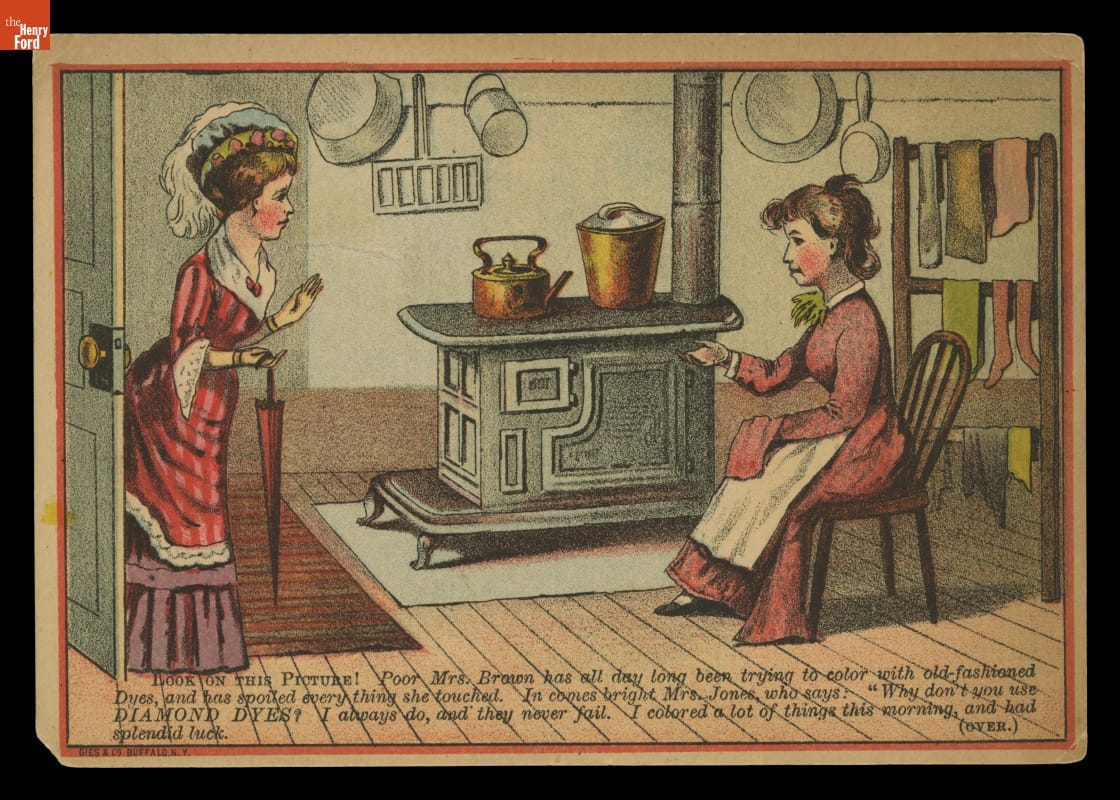
- Trade Card for Diamond Dyes, Wells, Richardson & Co., 1880-1885 - In the last third of the nineteenth century, an unprecedented variety of consumer goods and services flooded the American market. Advertisers, armed with new methods of color printing, bombarded potential customers with trade cards. Americans enjoyed and often saved the vibrant little advertisements found in product packages or distributed by local merchants. Many survive as historical records of commercialism in the United States.
- 1880-1885
- Collections - Artifact
Trade Card for Diamond Dyes, Wells, Richardson & Co., 1880-1885
In the last third of the nineteenth century, an unprecedented variety of consumer goods and services flooded the American market. Advertisers, armed with new methods of color printing, bombarded potential customers with trade cards. Americans enjoyed and often saved the vibrant little advertisements found in product packages or distributed by local merchants. Many survive as historical records of commercialism in the United States.