
Search
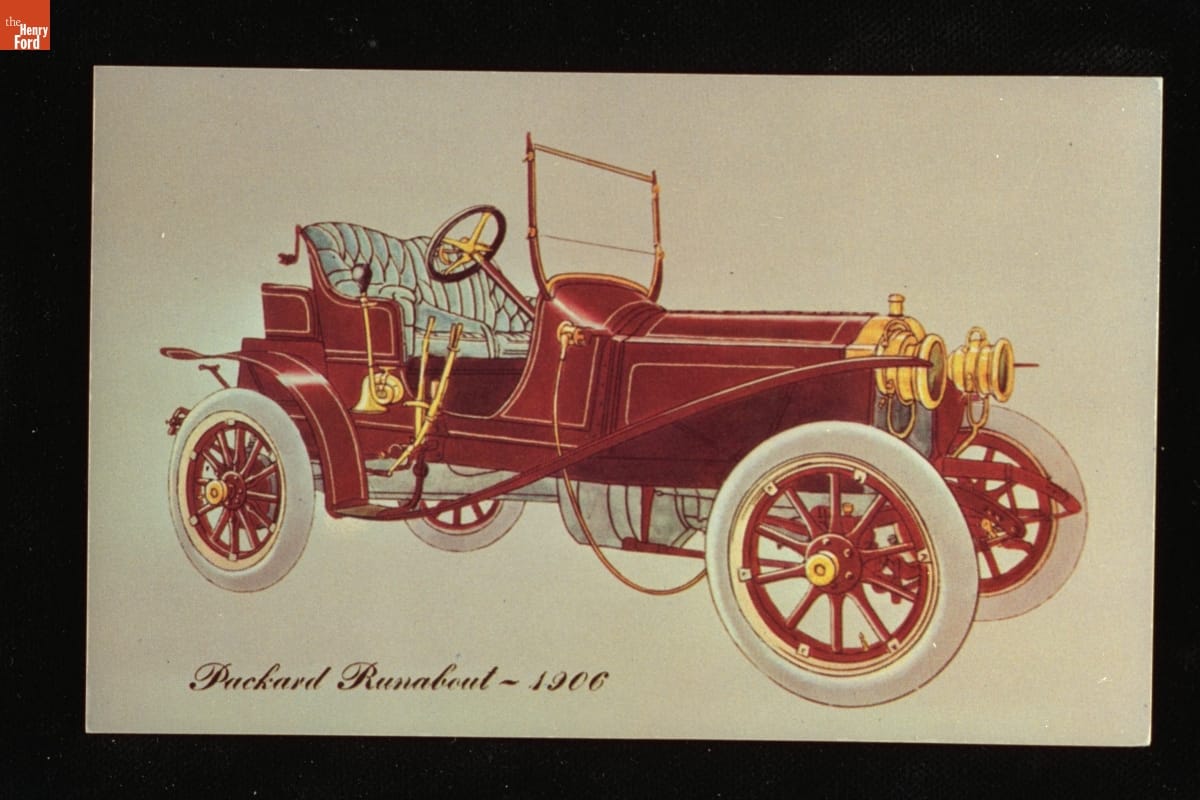
- Packard Runabout - 1906 - This postcard, featuring an illustration of an early Packard automobile, was published by the Autoprints company of New York. Postcards like this were sold to visitors at Henry Ford Museum & Greenfield Village in the 1950s. James Ward Packard founded Packard Motor Car Company in 1899. It became America's premier luxury marque and largely remained so until production ended in 1958.
- 1906
- Collections - Artifact
Packard Runabout - 1906
This postcard, featuring an illustration of an early Packard automobile, was published by the Autoprints company of New York. Postcards like this were sold to visitors at Henry Ford Museum & Greenfield Village in the 1950s. James Ward Packard founded Packard Motor Car Company in 1899. It became America's premier luxury marque and largely remained so until production ended in 1958.
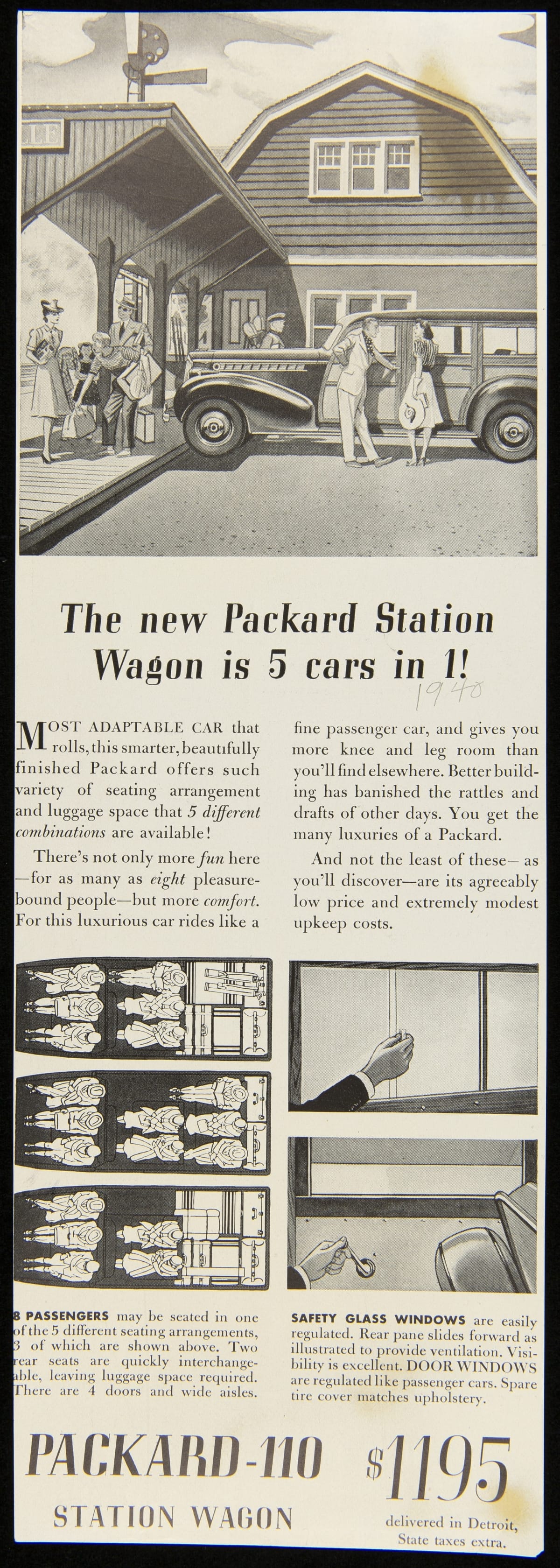
- "New Packard Station Wagon is 5 Cars In 1!," 1940 - Flexibility is generally a strong selling point when it comes to marketing automobiles. This 1940 advertisement from Packard claimed that the company's station wagons could be arranged in five different seating and cargo-carrying configurations. The 110 series cars were a more affordable option in the upmarket automaker's lineup -- but still with "the many luxuries of a Packard."
- 1940
- Collections - Artifact
"New Packard Station Wagon is 5 Cars In 1!," 1940
Flexibility is generally a strong selling point when it comes to marketing automobiles. This 1940 advertisement from Packard claimed that the company's station wagons could be arranged in five different seating and cargo-carrying configurations. The 110 series cars were a more affordable option in the upmarket automaker's lineup -- but still with "the many luxuries of a Packard."
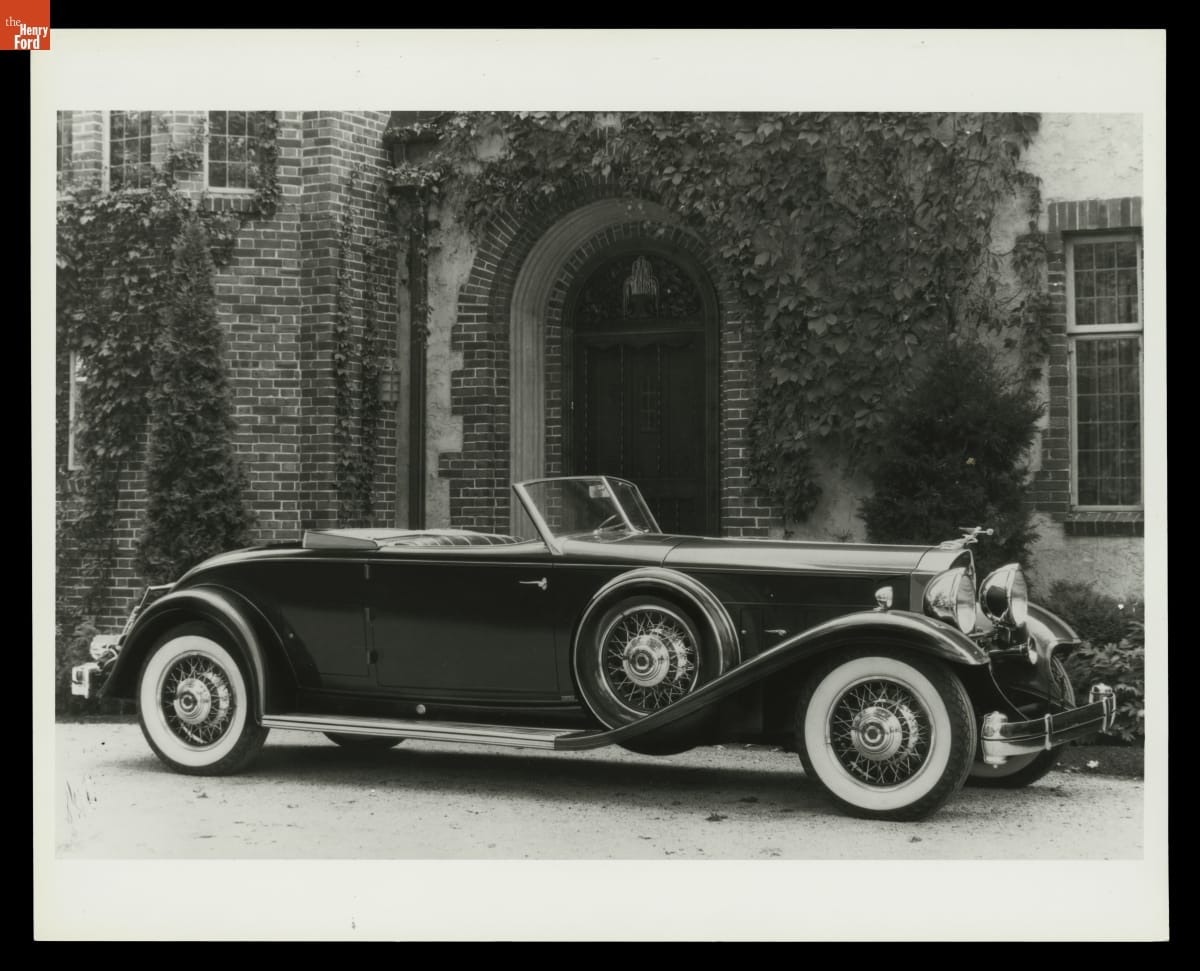
- 1932 Packard De Luxe Eight Model 2071 Convertible Coupe - For 1932, Packard offered its eight-cylinder models in three versions. The new Light Eight, with a comparatively low price of $1,795, was introduced in response to the Great Depression. The mid-line Standard Eight started at $2,485. The Deluxe Eight was Packard's premium eight-cylinder car. It started at $3,690 and boasted a top speed of 85 mph.
- 1932
- Collections - Artifact
1932 Packard De Luxe Eight Model 2071 Convertible Coupe
For 1932, Packard offered its eight-cylinder models in three versions. The new Light Eight, with a comparatively low price of $1,795, was introduced in response to the Great Depression. The mid-line Standard Eight started at $2,485. The Deluxe Eight was Packard's premium eight-cylinder car. It started at $3,690 and boasted a top speed of 85 mph.
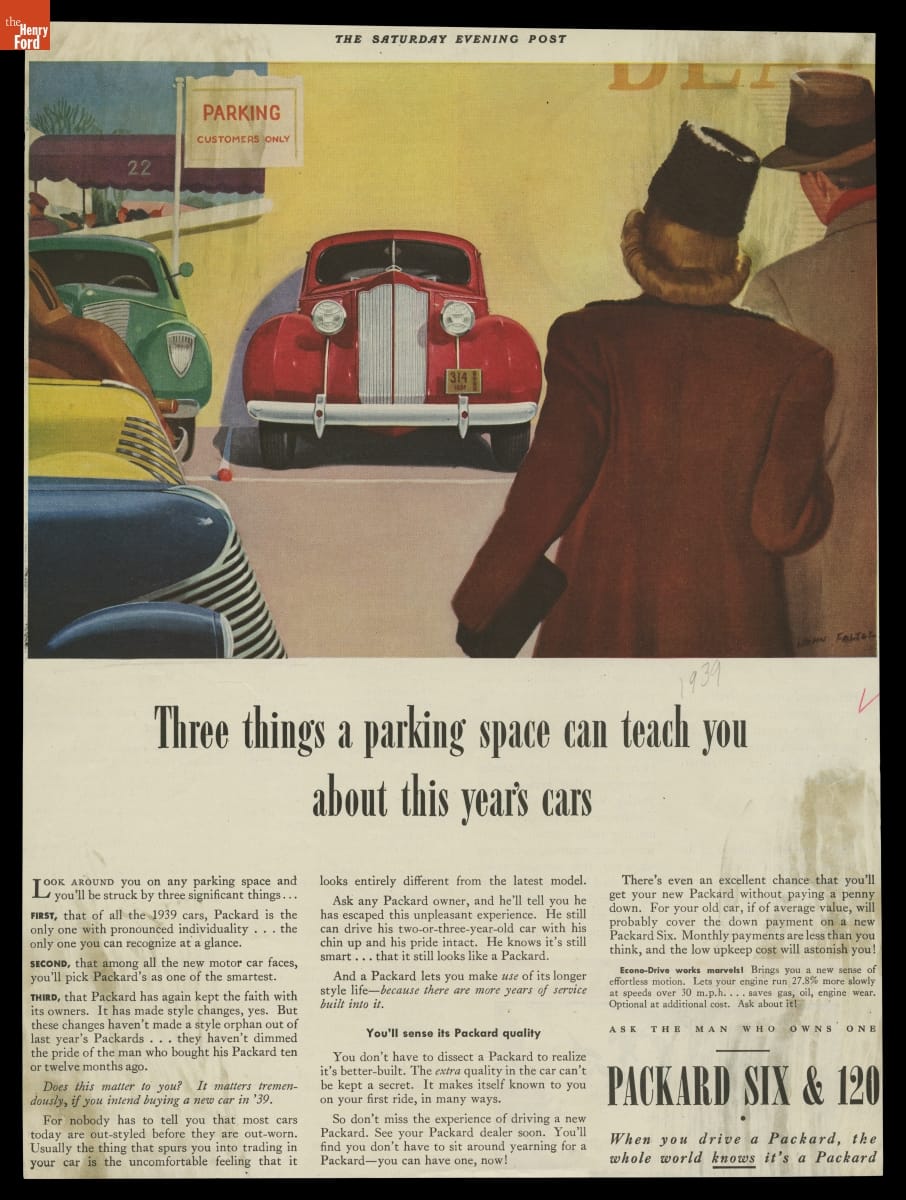
- Packard Advertisement, "Three Things a Parking Space Can Teach You About This Year's Cars," February 1939 - Packard automobiles stood apart from the rest -- or at least that's what this 1939 advertisement for the luxury automaker wanted you to believe. Certainly, Packard's tombstone-shaped radiator was distinctive. The company first used the design in 1904, and it remained a Packard trademark until the firm ended operations in 1958.
- February 11, 1939
- Collections - Artifact
Packard Advertisement, "Three Things a Parking Space Can Teach You About This Year's Cars," February 1939
Packard automobiles stood apart from the rest -- or at least that's what this 1939 advertisement for the luxury automaker wanted you to believe. Certainly, Packard's tombstone-shaped radiator was distinctive. The company first used the design in 1904, and it remained a Packard trademark until the firm ended operations in 1958.
- Packard Hubcap, 1925-1930 - Early automobile wheels had a central hub with a greased wheel bearing. Hub caps kept grease in and dust out. As wheels evolved and hubcaps became functionally unnecessary, they remained important to both manufacturers -- who branded wheel covers with maker names or logos -- and consumers -- who identified with hubcaps as statements about their cars and themselves.
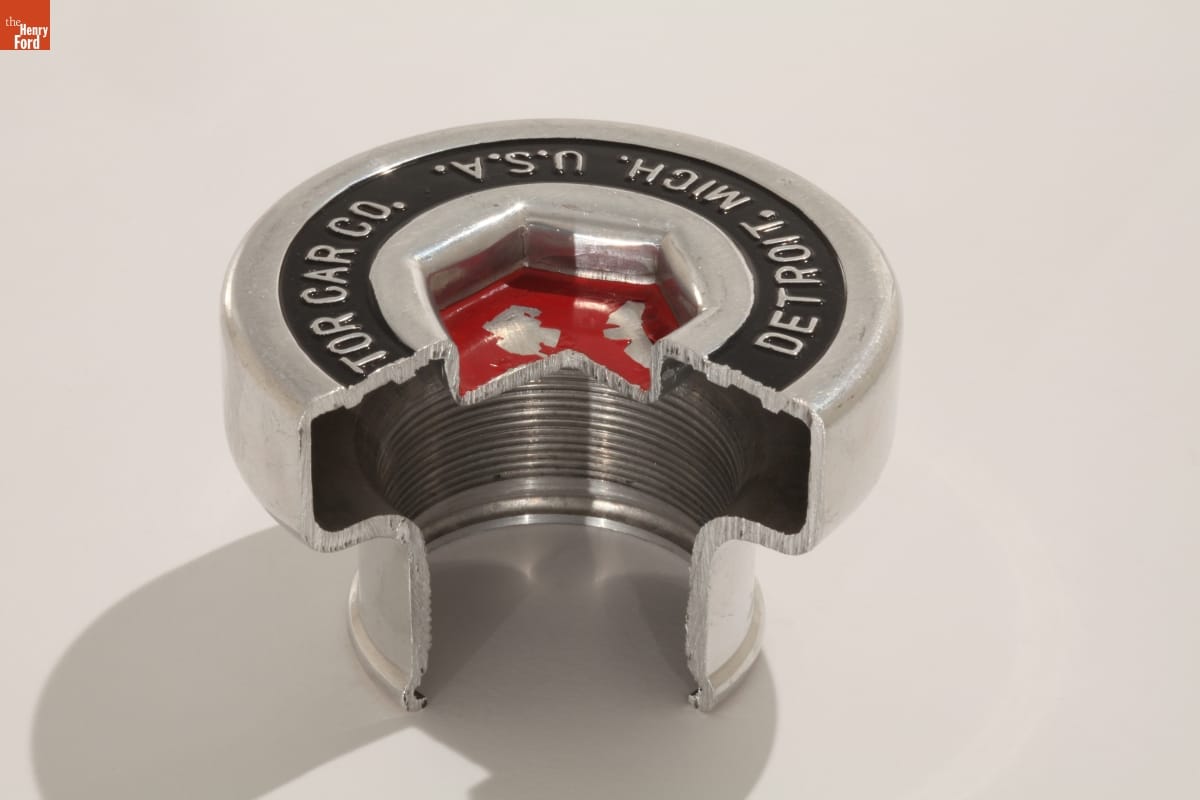
- 1925-1930
- Collections - Artifact
Packard Hubcap, 1925-1930
Early automobile wheels had a central hub with a greased wheel bearing. Hub caps kept grease in and dust out. As wheels evolved and hubcaps became functionally unnecessary, they remained important to both manufacturers -- who branded wheel covers with maker names or logos -- and consumers -- who identified with hubcaps as statements about their cars and themselves.
- Packard Hubcap, 1925-1930 - Early automobile wheels had a central hub with a greased wheel bearing. Hub caps kept grease in and dust out. As wheels evolved and hubcaps became functionally unnecessary, they remained important to both manufacturers -- who branded wheel covers with maker names or logos -- and consumers -- who identified with hubcaps as statements about their cars and themselves.
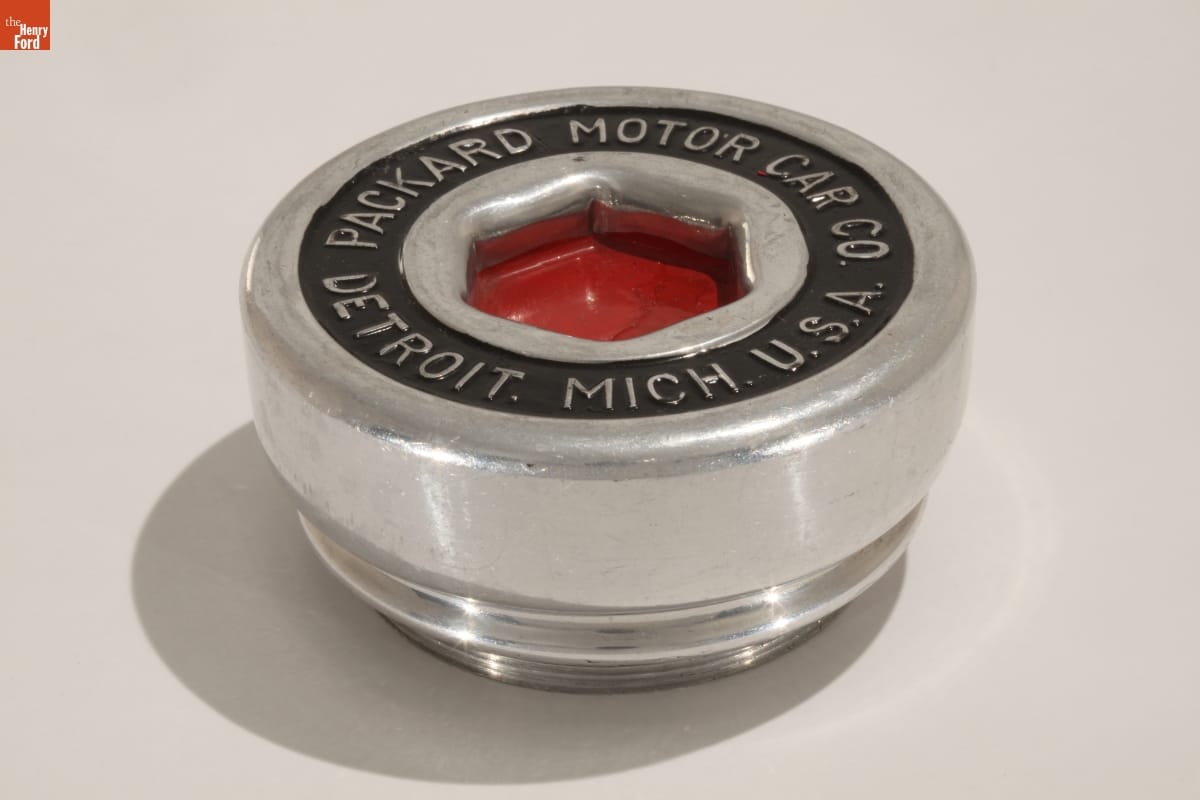
- 1925-1930
- Collections - Artifact
Packard Hubcap, 1925-1930
Early automobile wheels had a central hub with a greased wheel bearing. Hub caps kept grease in and dust out. As wheels evolved and hubcaps became functionally unnecessary, they remained important to both manufacturers -- who branded wheel covers with maker names or logos -- and consumers -- who identified with hubcaps as statements about their cars and themselves.
- Packard Twin-6 Advertisement, "Why Do Women Knit?," October 10, 1917 - The question asked by this 1917 Packard advertisement, "Why Do Women Knit," referred to women's efforts to knit vital clothing items for American soldiers fighting in World War I. The ad also mentioned the need to conserve gasoline -- something that Packard's 12-cylinder Twin Six engine was claimed to do for its owners.
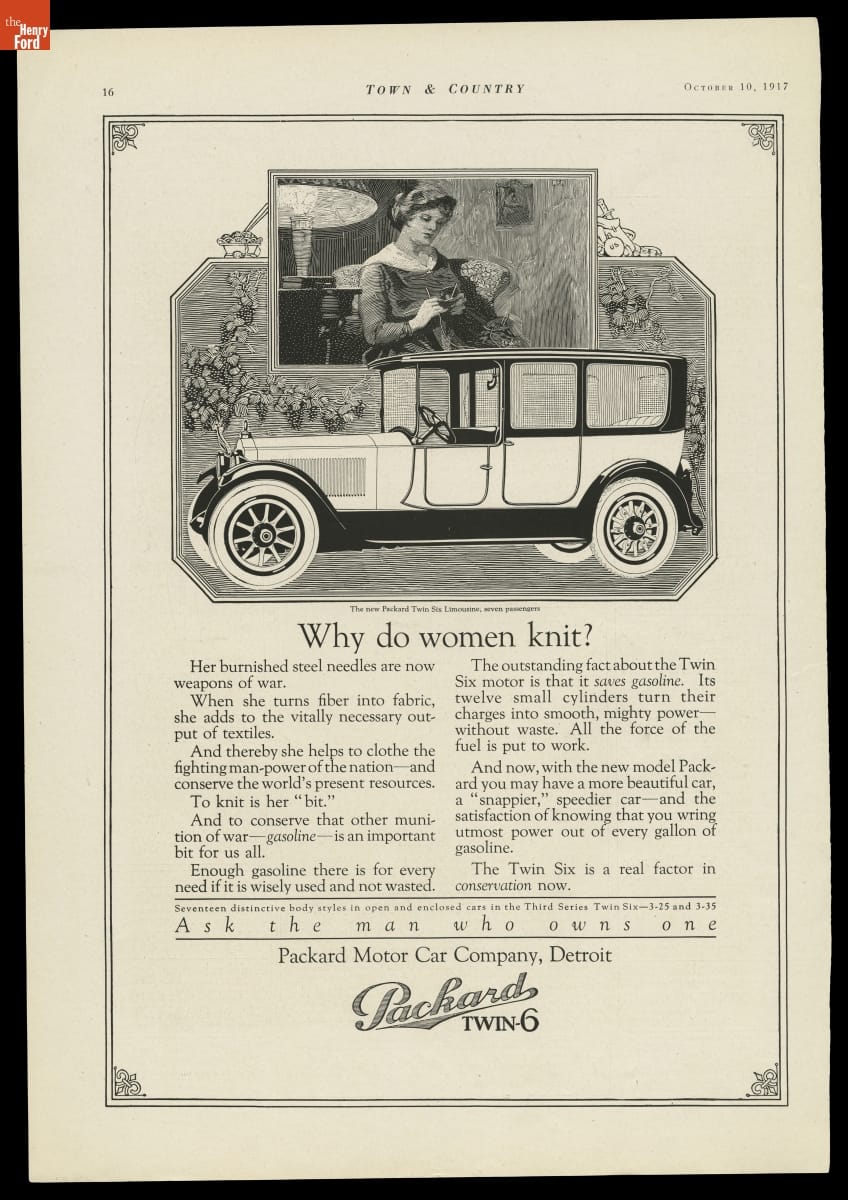
- October 10, 1917
- Collections - Artifact
Packard Twin-6 Advertisement, "Why Do Women Knit?," October 10, 1917
The question asked by this 1917 Packard advertisement, "Why Do Women Knit," referred to women's efforts to knit vital clothing items for American soldiers fighting in World War I. The ad also mentioned the need to conserve gasoline -- something that Packard's 12-cylinder Twin Six engine was claimed to do for its owners.
- Packard Predictor Showcar Final Design Rendering by William M. Schmidt, 1955 - William M. Schmidt joined Ford's Lincoln-Mercury design studio in 1940. By the time he left in 1955, Schmidt had risen to Chief Designer. He contributed to several Lincoln and Mercury vehicles including the dramatic Lincoln Futura concept car. Schmidt went on to work for Packard and Chrysler. He formed his own William M. Schmidt Associates in 1959.
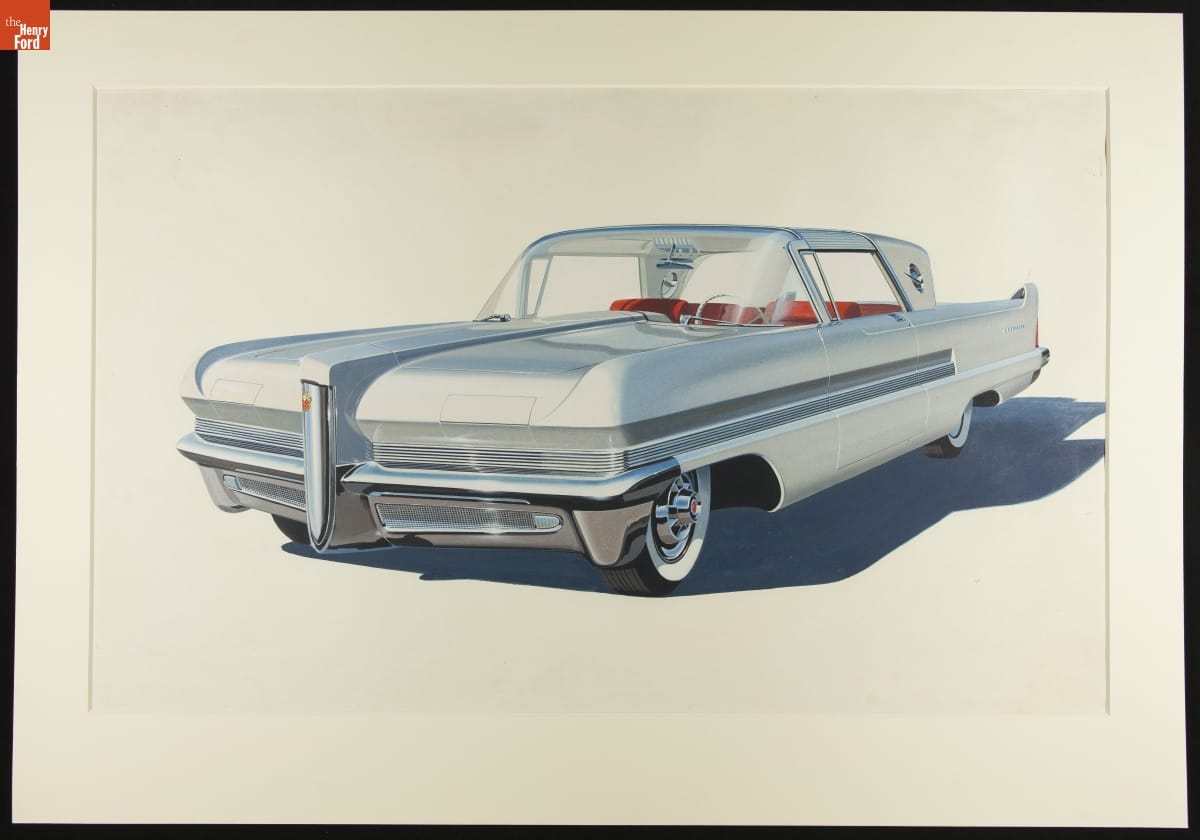
- 1955
- Collections - Artifact
Packard Predictor Showcar Final Design Rendering by William M. Schmidt, 1955
William M. Schmidt joined Ford's Lincoln-Mercury design studio in 1940. By the time he left in 1955, Schmidt had risen to Chief Designer. He contributed to several Lincoln and Mercury vehicles including the dramatic Lincoln Futura concept car. Schmidt went on to work for Packard and Chrysler. He formed his own William M. Schmidt Associates in 1959.
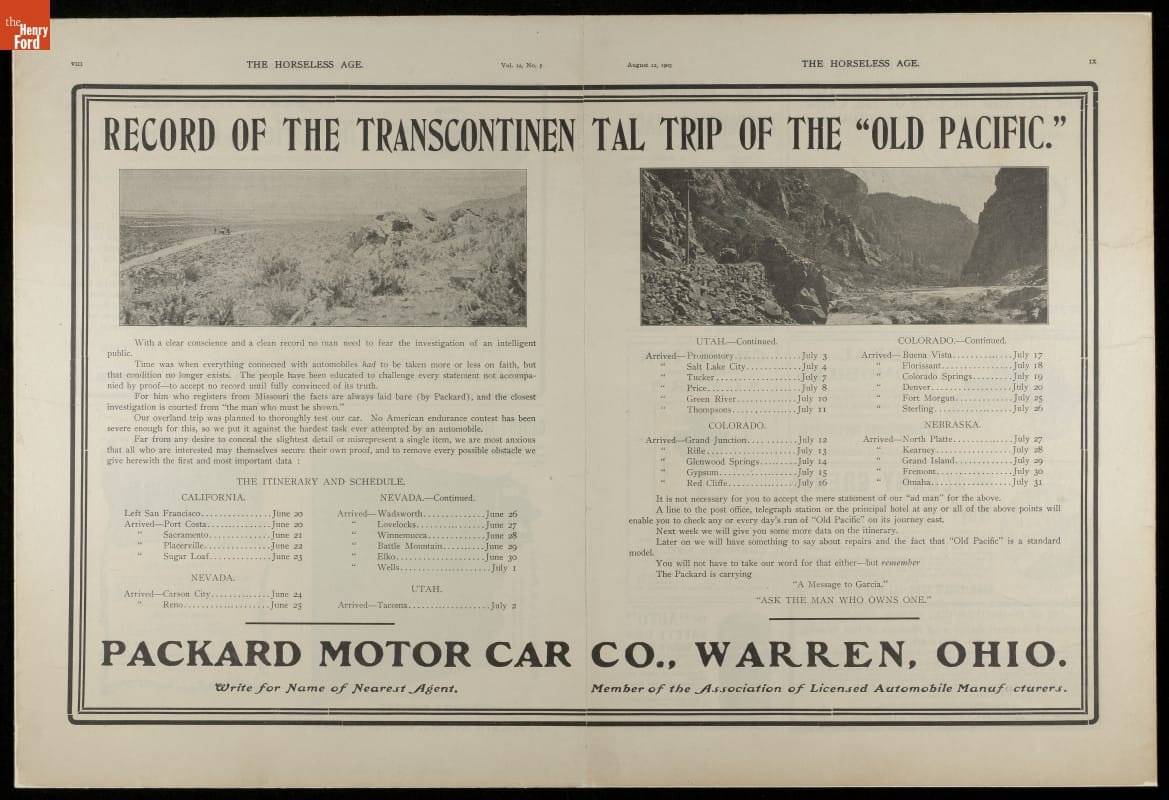
- Packard Motor Car Co. Advertisement, "Record of the Transcontinental Trip of the Old Pacific," 1903 - In 1903, two men drove a Packard Model F nicknamed "Old Pacific" from San Francisco to New York. Packard kept news-watchers informed during the two month overland trip. This ad from August 1903 provides a brief record of the car's progress. "Old Pacific" rolled into New York City on August 21. It was the second automobile to complete the epic journey.
- August 12, 1903
- Collections - Artifact
Packard Motor Car Co. Advertisement, "Record of the Transcontinental Trip of the Old Pacific," 1903
In 1903, two men drove a Packard Model F nicknamed "Old Pacific" from San Francisco to New York. Packard kept news-watchers informed during the two month overland trip. This ad from August 1903 provides a brief record of the car's progress. "Old Pacific" rolled into New York City on August 21. It was the second automobile to complete the epic journey.
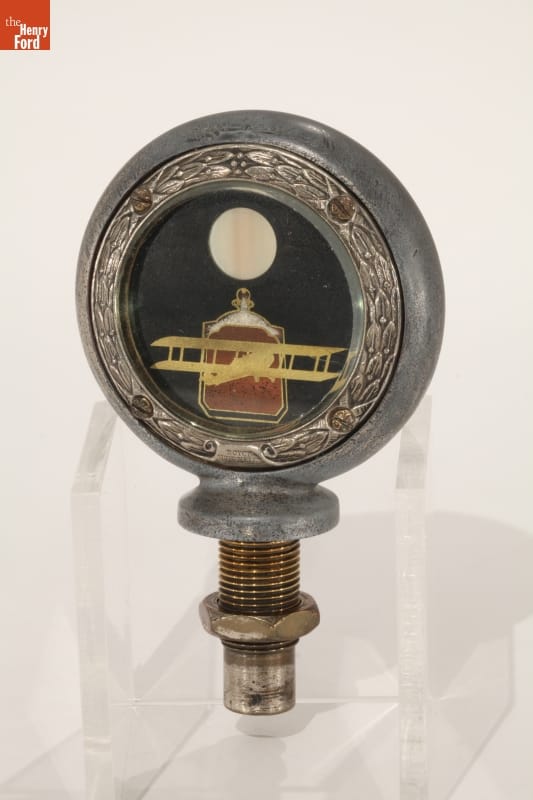
- Packard Motometer, circa 1925 - Automobiles often came without temperature gauges before the early 1930s, so enterprising manufacturers sold aftermarket motometers. Mounted on a car's radiator, these devices measured and displayed coolant water vapor temperature, notifying drivers if their automobiles were in danger of overheating. Moto-Meter Co. Inc. dominated the American market, producing the popular Boyce motometer and others featuring an automotive manufacturer's name or logo.
- circa 1925
- Collections - Artifact
Packard Motometer, circa 1925
Automobiles often came without temperature gauges before the early 1930s, so enterprising manufacturers sold aftermarket motometers. Mounted on a car's radiator, these devices measured and displayed coolant water vapor temperature, notifying drivers if their automobiles were in danger of overheating. Moto-Meter Co. Inc. dominated the American market, producing the popular Boyce motometer and others featuring an automotive manufacturer's name or logo.