
Search
- Reproduction of the 1856 Essay by John Burroughs, "Work and Wait" - Naturalist John Burroughs penned this composition during his college preparatory studies at Cooperstown Seminary. This was an early foray into essay writing in which Burroughs would excel. The photostatic reproduction of this essay, pictured above, was used by Clara Barrus, Burroughs' literary executor and official biographer, for her book <em>The Life and Letters of John Burroughs</em>, published in 1925.

- 1856
- Collections - Artifact
Reproduction of the 1856 Essay by John Burroughs, "Work and Wait"
Naturalist John Burroughs penned this composition during his college preparatory studies at Cooperstown Seminary. This was an early foray into essay writing in which Burroughs would excel. The photostatic reproduction of this essay, pictured above, was used by Clara Barrus, Burroughs' literary executor and official biographer, for her book The Life and Letters of John Burroughs, published in 1925.
- Tattoo Flash Portfolio, circa 1918 - Tattoos communicate stories. Their content ranges from deeply personal and traditional--to regrettable and frivolous. In the early 1900s, "Professor" Waters apprenticed as a tattoo artist in carnivals and New York's Bowery District. He ran a successful supply shop in Detroit (1918-1939), patenting the standard "two-coil" tattoo machine in 1929. Designs from his flash sheets continue to inspire tattooists today.
- circa 1918
- Collections - Artifact
Tattoo Flash Portfolio, circa 1918
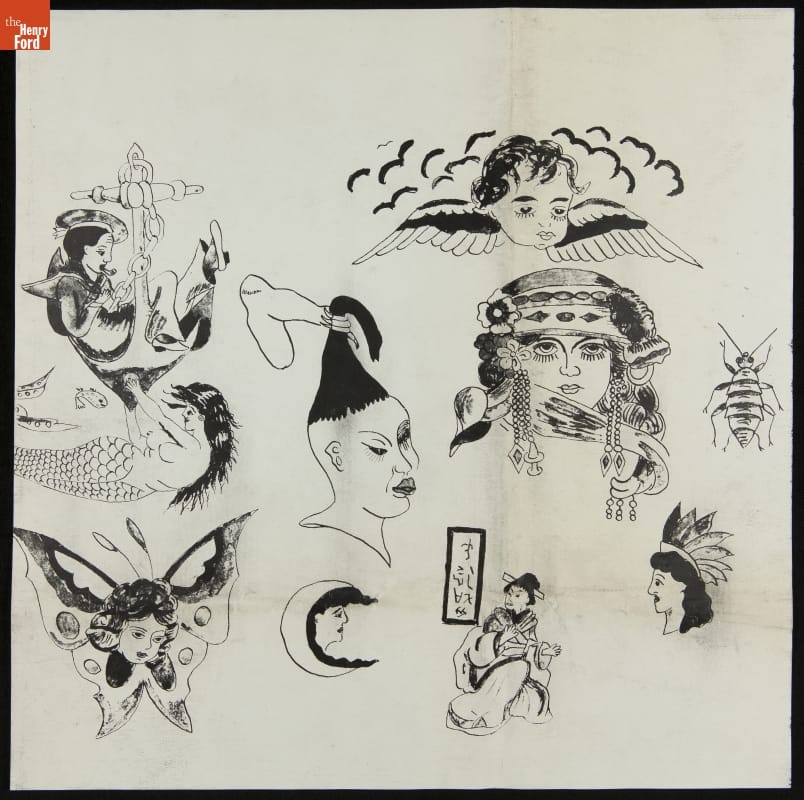
Tattoos communicate stories. Their content ranges from deeply personal and traditional--to regrettable and frivolous. In the early 1900s, "Professor" Waters apprenticed as a tattoo artist in carnivals and New York's Bowery District. He ran a successful supply shop in Detroit (1918-1939), patenting the standard "two-coil" tattoo machine in 1929. Designs from his flash sheets continue to inspire tattooists today.
- Tattoo Flash, circa 1925 - Tattoos communicate stories. Their content ranges from deeply personal and traditional--to regrettable and frivolous. In the early 1900s, "Professor" Waters apprenticed as a tattoo artist in carnivals and New York's Bowery District. He ran a successful supply shop in Detroit (1918-1939), patenting the standard "two-coil" tattoo machine in 1929. Designs from his flash sheets continue to inspire tattooists today.
- circa 1925
- Collections - Artifact
Tattoo Flash, circa 1925
Tattoos communicate stories. Their content ranges from deeply personal and traditional--to regrettable and frivolous. In the early 1900s, "Professor" Waters apprenticed as a tattoo artist in carnivals and New York's Bowery District. He ran a successful supply shop in Detroit (1918-1939), patenting the standard "two-coil" tattoo machine in 1929. Designs from his flash sheets continue to inspire tattooists today.
- Cycle of Operation, Tracing the Flow of the Gas, Steam and Water, in the Ford Gas-Steam Power Plant, 1916 -
- 1916
- Collections - Artifact
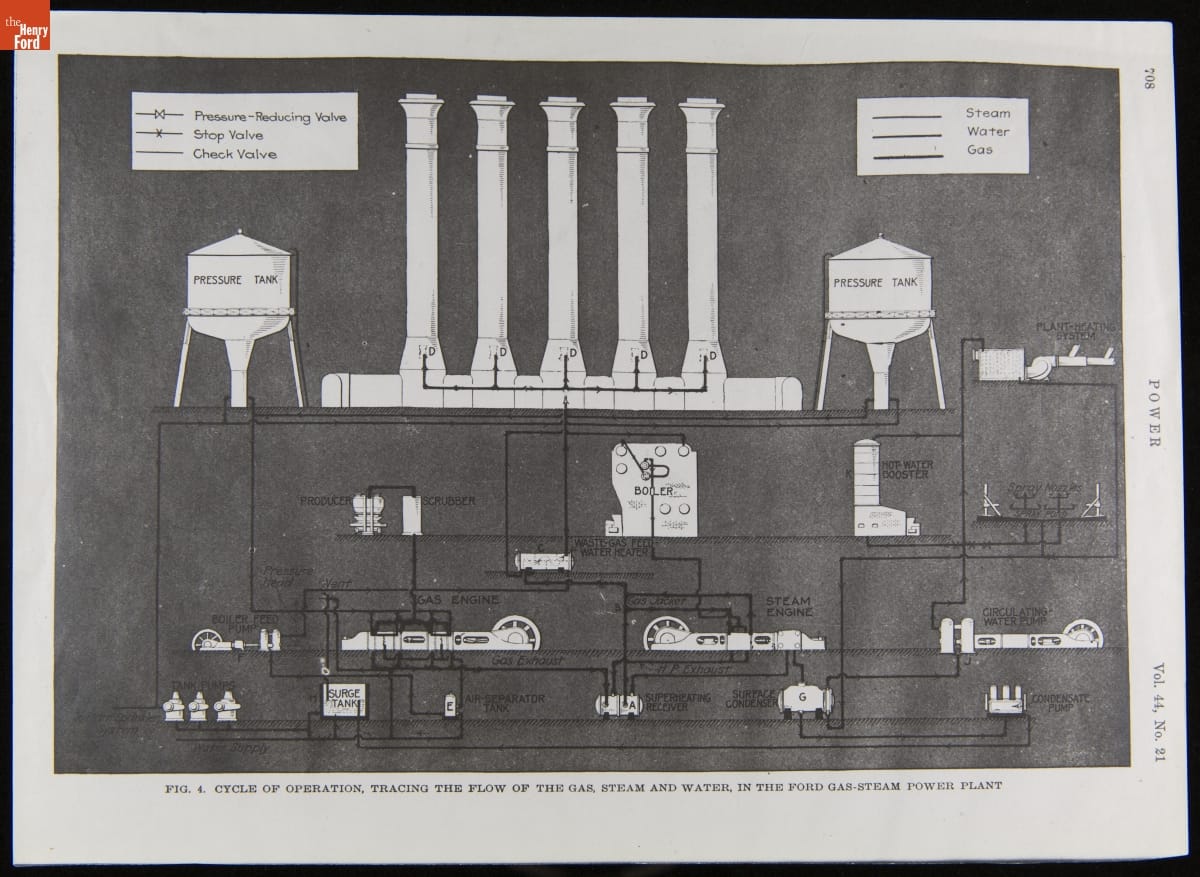
Cycle of Operation, Tracing the Flow of the Gas, Steam and Water, in the Ford Gas-Steam Power Plant, 1916
- Reproduction of the 1819 Book, "The Progress of the Dairy" -
- 1819
- Collections - Artifact
Reproduction of the 1819 Book, "The Progress of the Dairy"
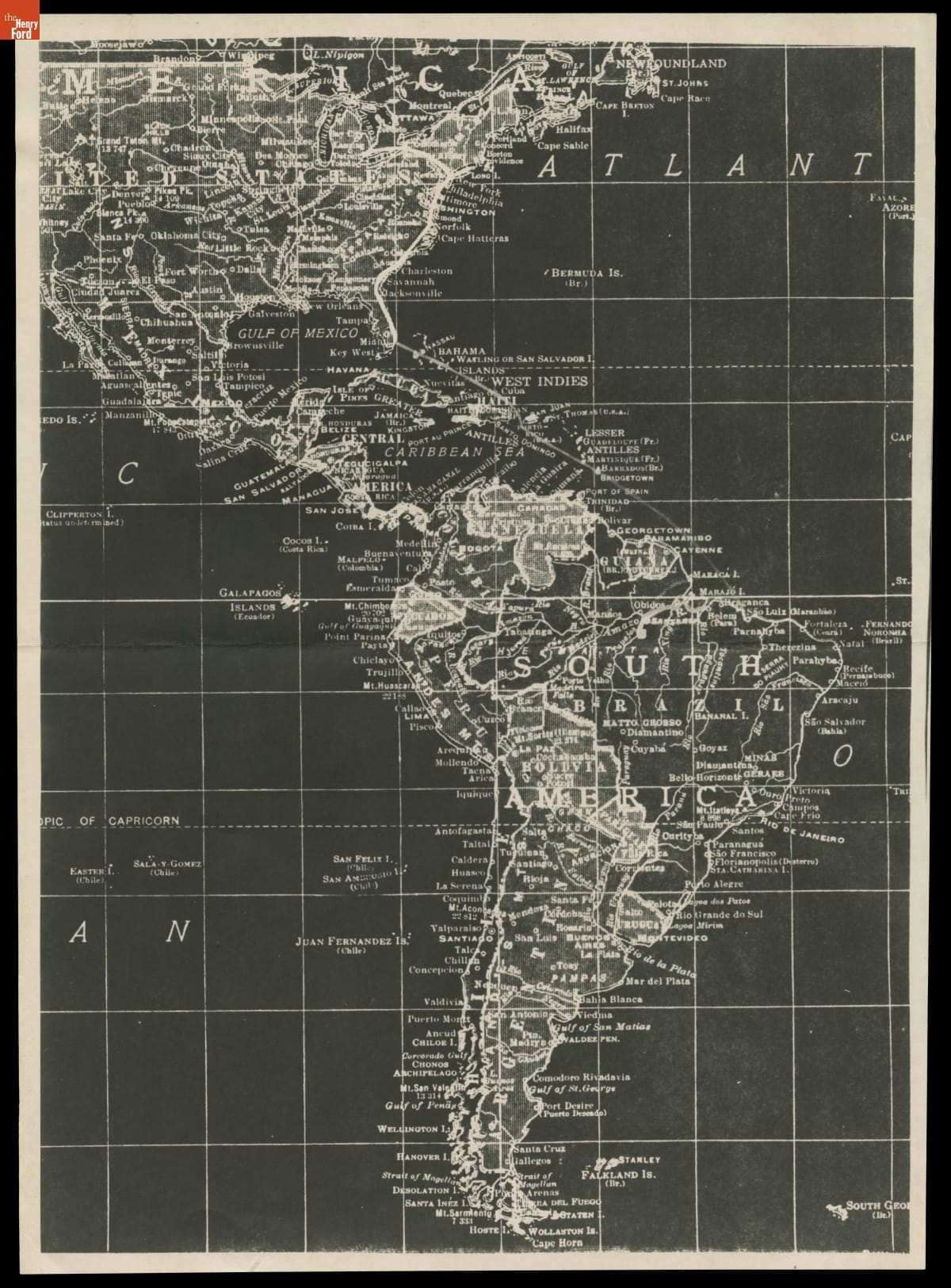
- Map Showing Routes of Communication between Dearborn, Michigan and Fordlandia, Brazil, circa 1928 - Henry Ford established Fordlandia and Belterra in the Brazilian rainforest to supply rubber for automobiles. He began shipping machinery and supplies to the Amazon in 1928. This map traced the routes by which materials were sent from Ford's facilities in Dearborn, Michigan, to Fordlandia, some 3,600 miles away. The plantations failed and Ford Motor Company abandoned the project in 1945.
- circa 1928
- Collections - Artifact
Map Showing Routes of Communication between Dearborn, Michigan and Fordlandia, Brazil, circa 1928
Henry Ford established Fordlandia and Belterra in the Brazilian rainforest to supply rubber for automobiles. He began shipping machinery and supplies to the Amazon in 1928. This map traced the routes by which materials were sent from Ford's facilities in Dearborn, Michigan, to Fordlandia, some 3,600 miles away. The plantations failed and Ford Motor Company abandoned the project in 1945.
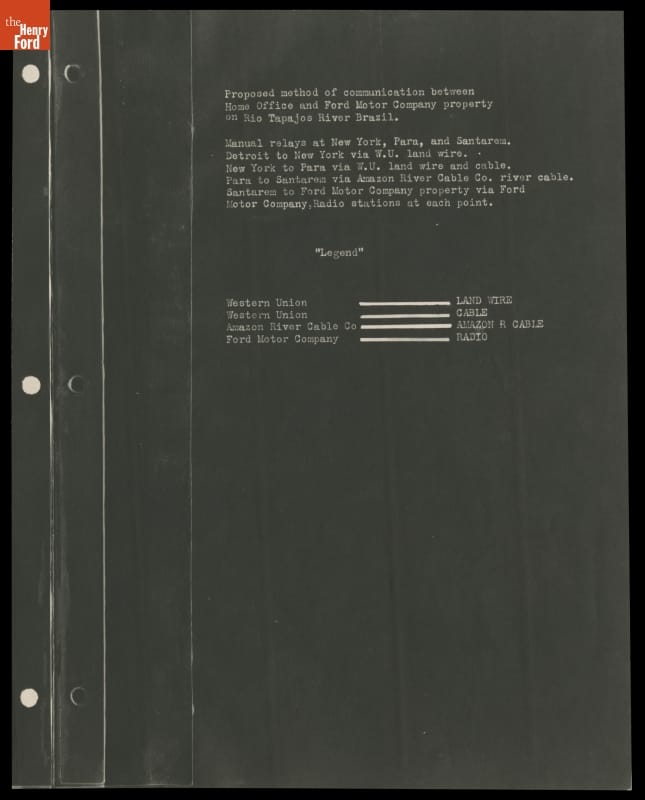
- Legend for Map Showing Routes of Communication Between Dearborn, Michigan and Fordlandia, Brazil, circa 1928 - Henry Ford established Fordlandia and Belterra in the Brazilian rainforest to supply rubber for automobiles. He began shipping machinery and supplies to the Amazon in 1928. This map traced the routes by which materials were sent from Ford's facilities in Dearborn, Michigan, to Fordlandia, some 3,600 miles away. The plantations failed and Ford Motor Company abandoned the project in 1945.
- circa 1928
- Collections - Artifact
Legend for Map Showing Routes of Communication Between Dearborn, Michigan and Fordlandia, Brazil, circa 1928
Henry Ford established Fordlandia and Belterra in the Brazilian rainforest to supply rubber for automobiles. He began shipping machinery and supplies to the Amazon in 1928. This map traced the routes by which materials were sent from Ford's facilities in Dearborn, Michigan, to Fordlandia, some 3,600 miles away. The plantations failed and Ford Motor Company abandoned the project in 1945.
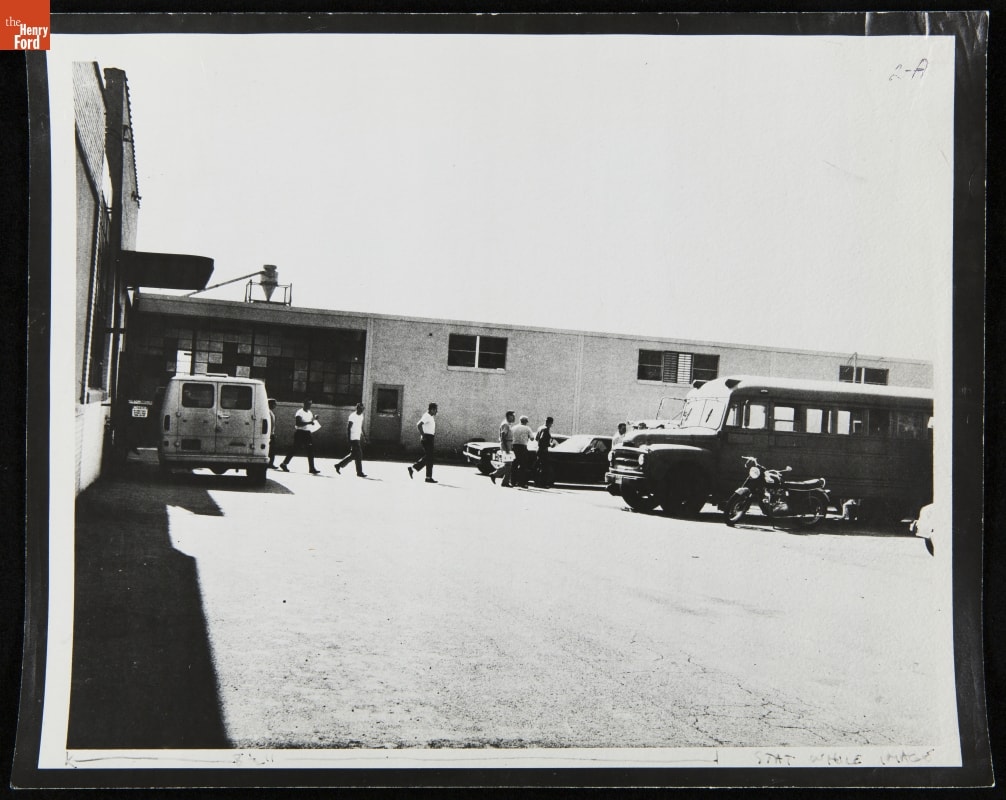
- Employee Strike at La-Z-Boy, 1971 -
- 1971
- Collections - Artifact
Employee Strike at La-Z-Boy, 1971
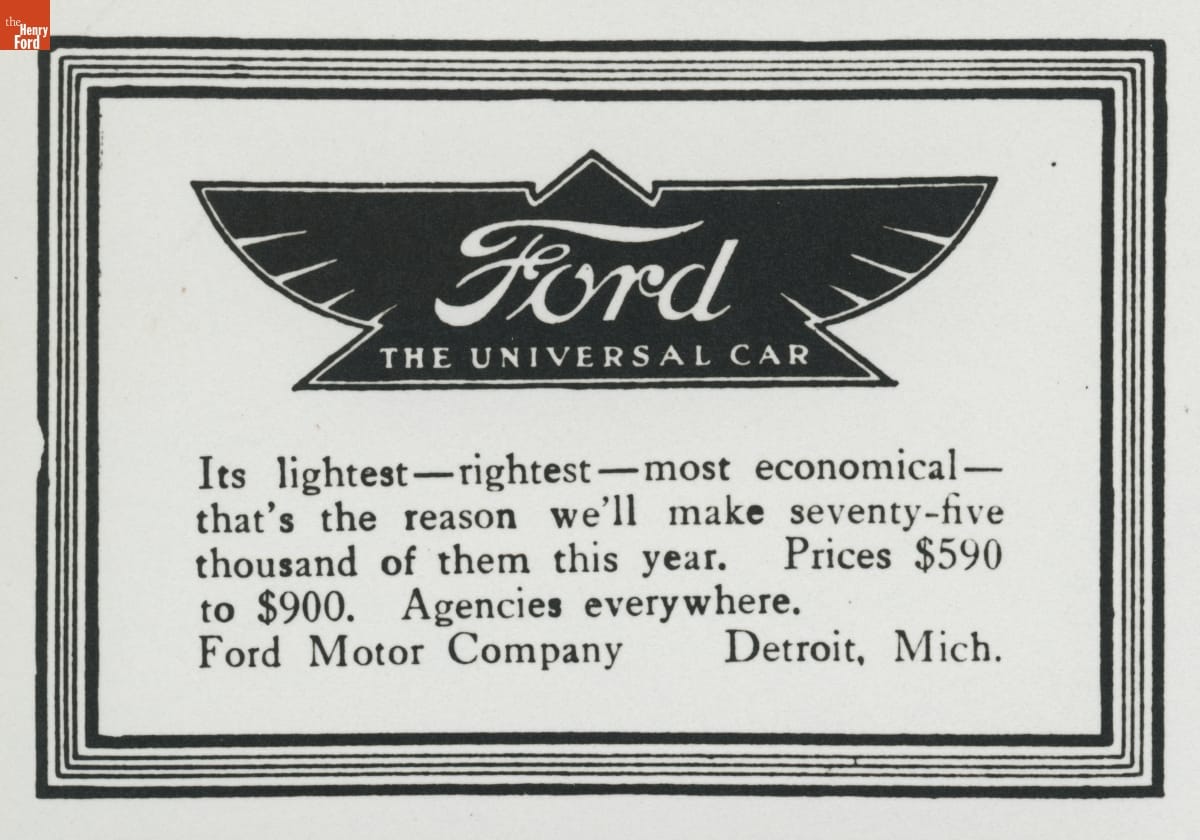
- Ford Model T Advertisement, "Ford - The Universal Car," 1912 - Henry Ford's Model T was the first successful "world car" -- a car that could be sold around the world with only minor modifications to its basic platform and parts. This advertisement boasts the universal appeal of a car made and sold not only in the United States but also in South America, Europe, southern and eastern Asia, and Australia.
- August 28, 1912
- Collections - Artifact
Ford Model T Advertisement, "Ford - The Universal Car," 1912
Henry Ford's Model T was the first successful "world car" -- a car that could be sold around the world with only minor modifications to its basic platform and parts. This advertisement boasts the universal appeal of a car made and sold not only in the United States but also in South America, Europe, southern and eastern Asia, and Australia.
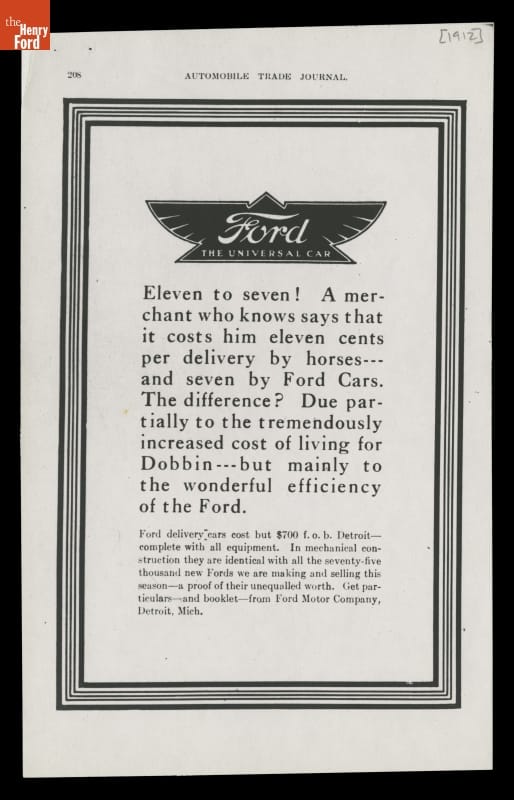
- 1912 Ford Model T Advertisement, "Eleven to Seven!" - Ford Motor Company claimed the superiority of its Model T-based delivery cars over horse-drawn wagons in this advertisement from 1912. The car might cost more up front, but it only used fuel when it ran. A horse had to be fed and stabled whether it worked or not.
- July 01, 1912
- Collections - Artifact
1912 Ford Model T Advertisement, "Eleven to Seven!"
Ford Motor Company claimed the superiority of its Model T-based delivery cars over horse-drawn wagons in this advertisement from 1912. The car might cost more up front, but it only used fuel when it ran. A horse had to be fed and stabled whether it worked or not.