
Search
- Henry Ford's Private Railroad Car "Fair Lane," 1921 - By 1920, Henry and Clara Ford found it increasingly difficult to travel with any degree of privacy. They purchased a private railcar and named it <em>Fair Lane</em>. The car had four private rooms, an observation lounge, a dining room, and a fully equipped kitchen. It could accommodate eight passengers. The couple made over 400 trips using <em>Fair Lane</em> before selling the passenger car in 1942.

- June 23, 1921
- Collections - Artifact
Henry Ford's Private Railroad Car "Fair Lane," 1921
By 1920, Henry and Clara Ford found it increasingly difficult to travel with any degree of privacy. They purchased a private railcar and named it Fair Lane. The car had four private rooms, an observation lounge, a dining room, and a fully equipped kitchen. It could accommodate eight passengers. The couple made over 400 trips using Fair Lane before selling the passenger car in 1942.
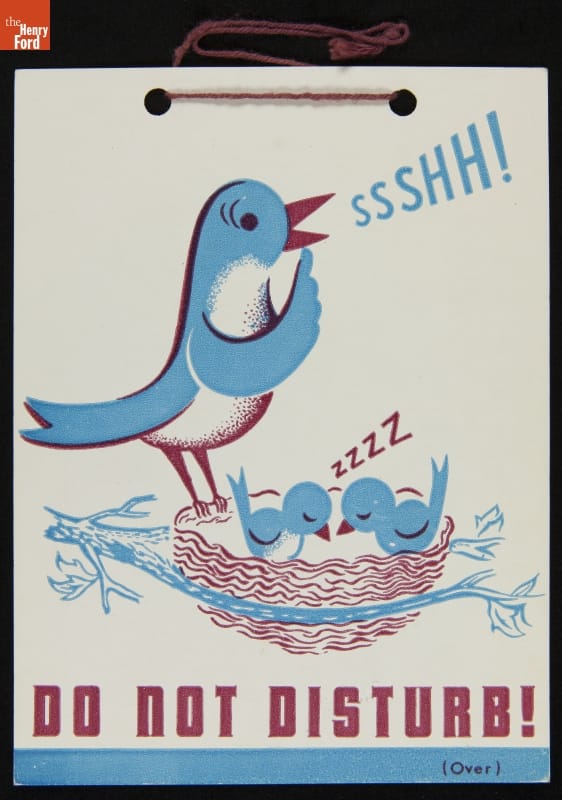
- Sign, "SSSHH! Do Not Disturb!" 1950-1960 - Like today, proprietors of mid-20th century hotels, motels and inns provided "Do Not Disturb" signs for weary travelers who wanted a restful stay. Guests placed the sign outside on their door to alert staff to be quiet and not enter. After a peaceful night's sleep, some guests may have required other services. This sign also informed guests of dining hours, laundry services and even shopping opportunities.
- 1950-1960
- Collections - Artifact
Sign, "SSSHH! Do Not Disturb!" 1950-1960
Like today, proprietors of mid-20th century hotels, motels and inns provided "Do Not Disturb" signs for weary travelers who wanted a restful stay. Guests placed the sign outside on their door to alert staff to be quiet and not enter. After a peaceful night's sleep, some guests may have required other services. This sign also informed guests of dining hours, laundry services and even shopping opportunities.
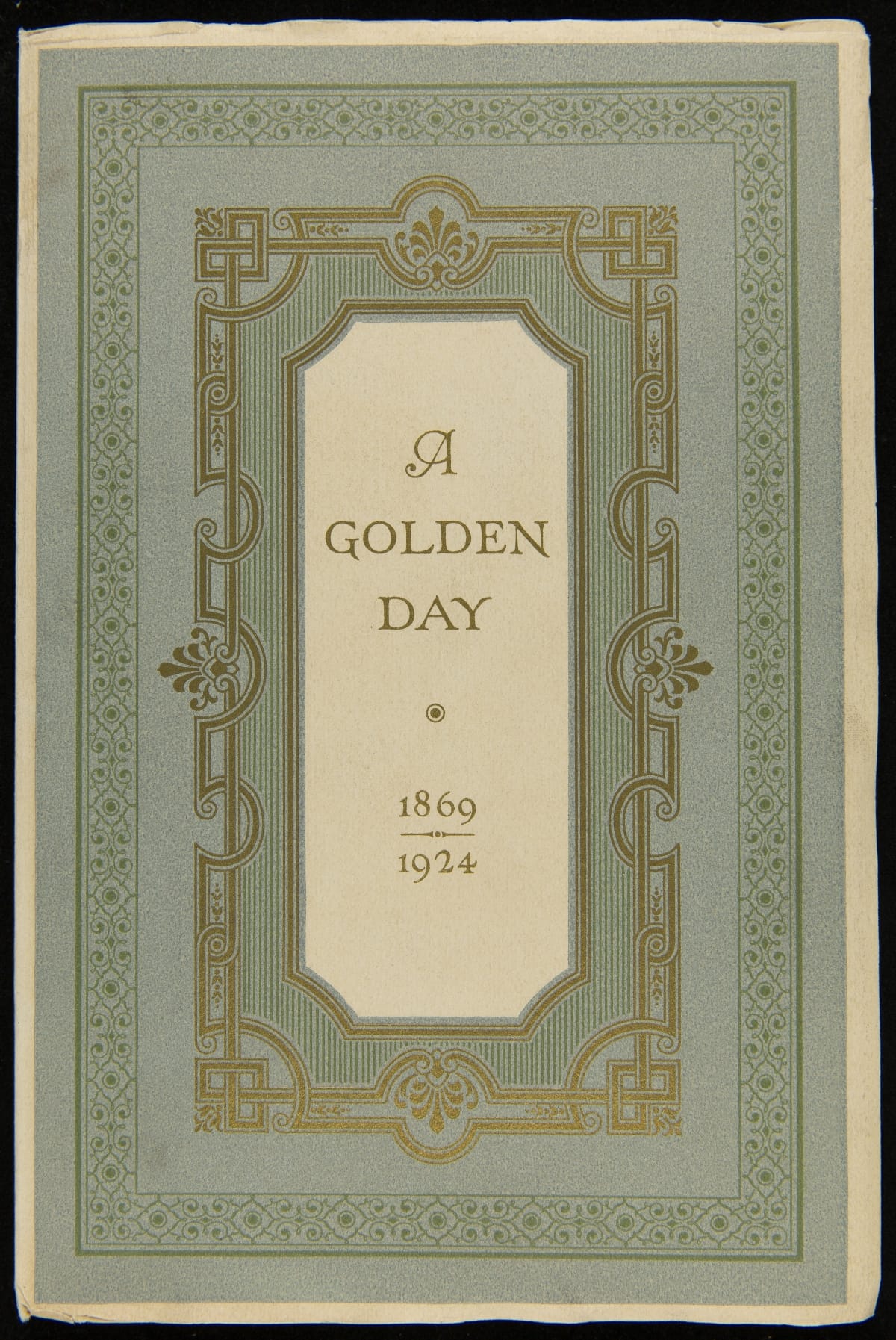
- H. J. Heinz Memorial Statue Dedication, "A Golden Day," at Heinz Main Plant, Pittsburgh, Pennsylvania, October 11, 1924 - H.J. Heinz valued a strong relationship between his company and its employees. This resulted in a world-class employee welfare program which included amenities, programs, and policies with consideration for employees' well-being. In 1924, to commemorate the company's 55th anniversary, employees erected a memorial statue as a token of their gratitude for their employer. This is a program from the celebration, called "A Golden Day."
- 1925
- Collections - Artifact
H. J. Heinz Memorial Statue Dedication, "A Golden Day," at Heinz Main Plant, Pittsburgh, Pennsylvania, October 11, 1924
H.J. Heinz valued a strong relationship between his company and its employees. This resulted in a world-class employee welfare program which included amenities, programs, and policies with consideration for employees' well-being. In 1924, to commemorate the company's 55th anniversary, employees erected a memorial statue as a token of their gratitude for their employer. This is a program from the celebration, called "A Golden Day."
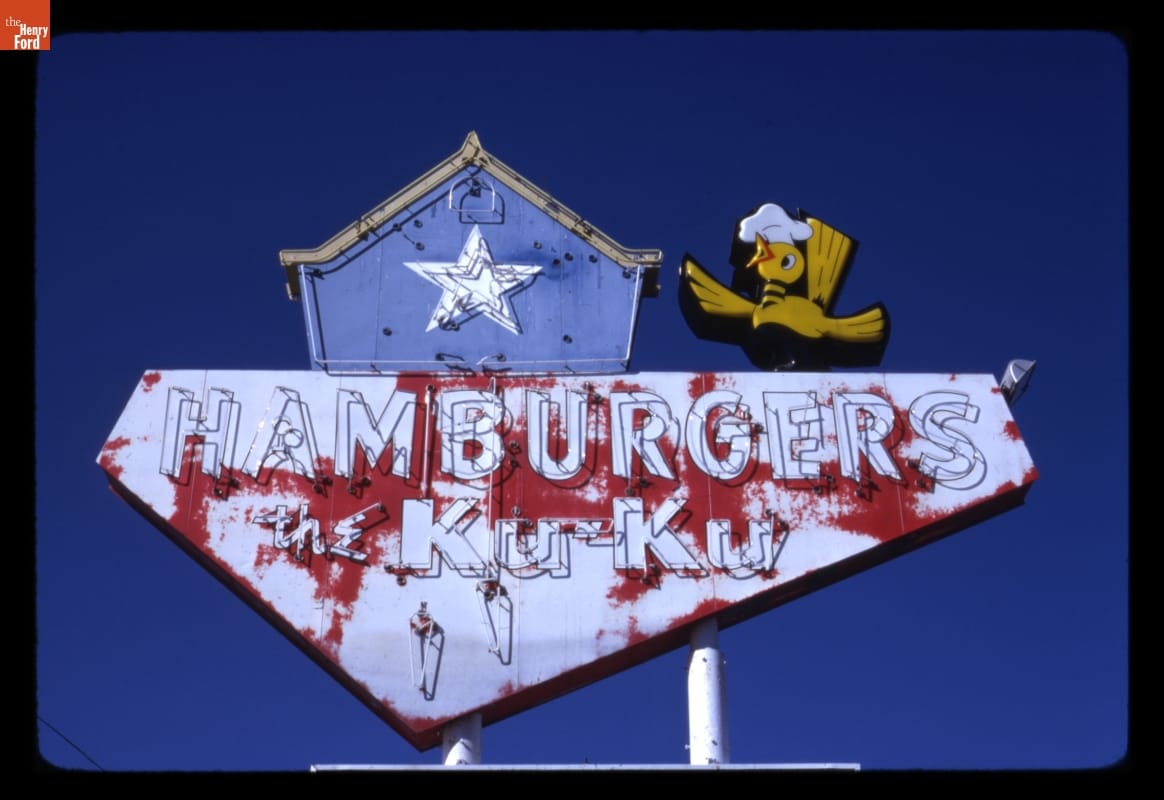
- Waylan's Ku-Ku Burger Sign, Oklahoma City, Oklahoma, 1979 - In the mid-1970s, John Margolies began to assemble a visual record of America's built roadside landscape. Over the following three decades, he traveled thousands of miles to photograph the overlooked and often quickly vanishing structures that had grown out of American automobile culture and main street commerce. His photographs of hotels, motels, diners, service stations, drive-ins and attractions celebrate and capture a unique chapter of American history.
- 1979
- Collections - Artifact
Waylan's Ku-Ku Burger Sign, Oklahoma City, Oklahoma, 1979
In the mid-1970s, John Margolies began to assemble a visual record of America's built roadside landscape. Over the following three decades, he traveled thousands of miles to photograph the overlooked and often quickly vanishing structures that had grown out of American automobile culture and main street commerce. His photographs of hotels, motels, diners, service stations, drive-ins and attractions celebrate and capture a unique chapter of American history.
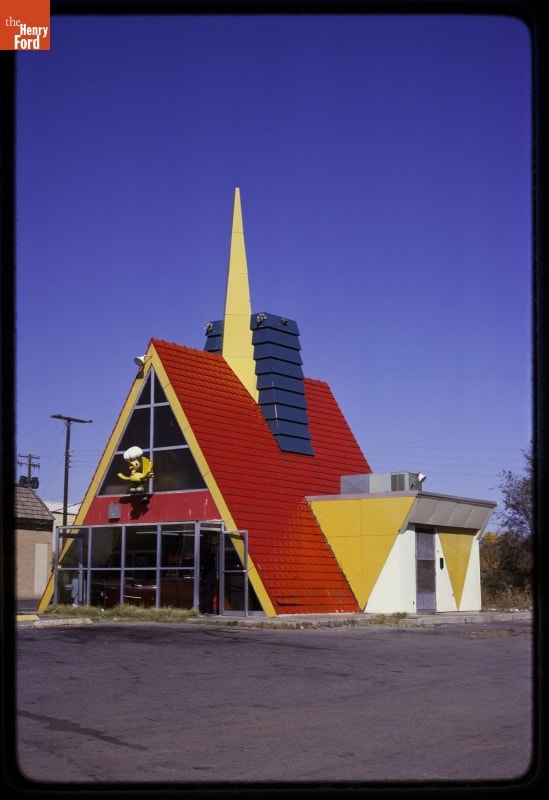
- The Ku-Ku Drive In, Oklahoma City, Oklahoma, 1979 - In the mid-1970s, John Margolies began to assemble a visual record of America's built roadside landscape. Over the following three decades, he traveled thousands of miles to photograph the overlooked and often quickly vanishing structures that had grown out of American automobile culture and main street commerce. His photographs of hotels, motels, diners, service stations, drive-ins and attractions celebrate and capture a unique chapter of American history.
- 1979
- Collections - Artifact
The Ku-Ku Drive In, Oklahoma City, Oklahoma, 1979
In the mid-1970s, John Margolies began to assemble a visual record of America's built roadside landscape. Over the following three decades, he traveled thousands of miles to photograph the overlooked and often quickly vanishing structures that had grown out of American automobile culture and main street commerce. His photographs of hotels, motels, diners, service stations, drive-ins and attractions celebrate and capture a unique chapter of American history.
- Model T Cars on Assembly Line, Ford Motor Company Plant in Oklahoma City, Oklahoma, circa 1916 - Starting in the early 1910s, Ford Motor Company opened domestic assembly plants throughout the United States. Assembling automobiles closer to regional markets reduced shipping costs -- parts were cheaper to ship than completed automobiles. Ford opened a four-story factory in Oklahoma City in 1916. Workers assembled Model Ts for customers in Oklahoma and parts of the surrounding states.
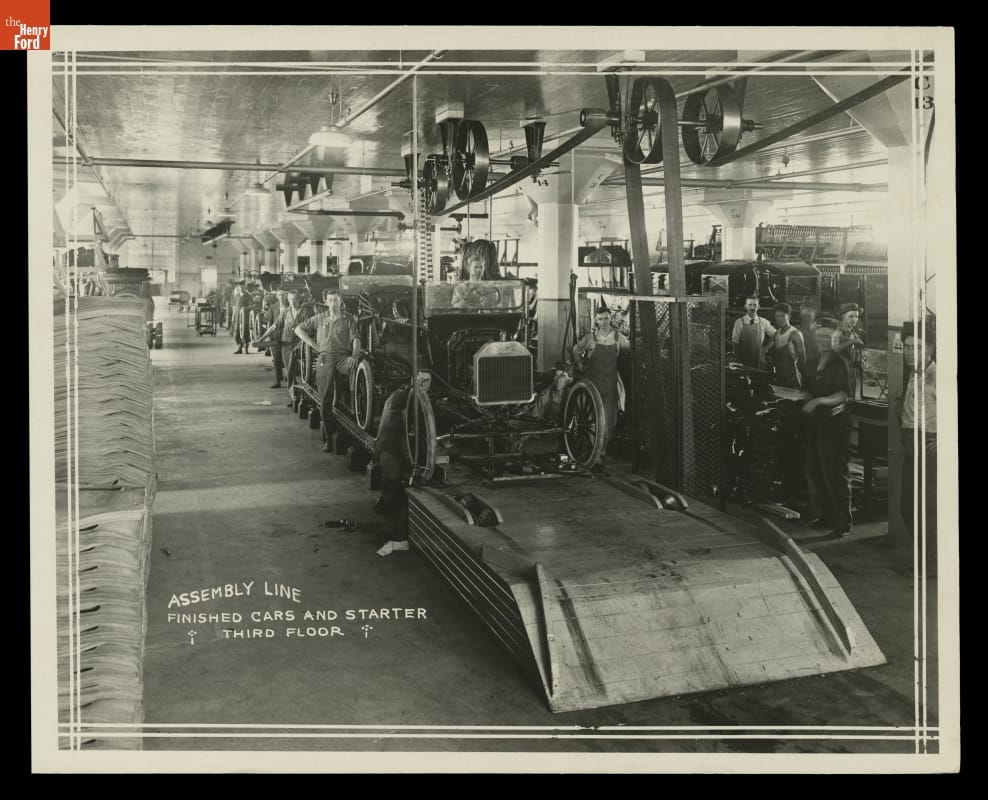
- circa 1916
- Collections - Artifact
Model T Cars on Assembly Line, Ford Motor Company Plant in Oklahoma City, Oklahoma, circa 1916
Starting in the early 1910s, Ford Motor Company opened domestic assembly plants throughout the United States. Assembling automobiles closer to regional markets reduced shipping costs -- parts were cheaper to ship than completed automobiles. Ford opened a four-story factory in Oklahoma City in 1916. Workers assembled Model Ts for customers in Oklahoma and parts of the surrounding states.
- Ford Motor Company Branch in Oklahoma City, Oklahoma, February 8, 1925 - Starting in the early 1910s, Ford Motor Company opened domestic assembly plants throughout the United States. Assembling automobiles closer to regional markets reduced shipping costs -- parts were cheaper to ship than completed automobiles. Ford opened a four-story factory in Oklahoma City in 1916. Workers assembled Model Ts for customers in Oklahoma and parts of the surrounding states.
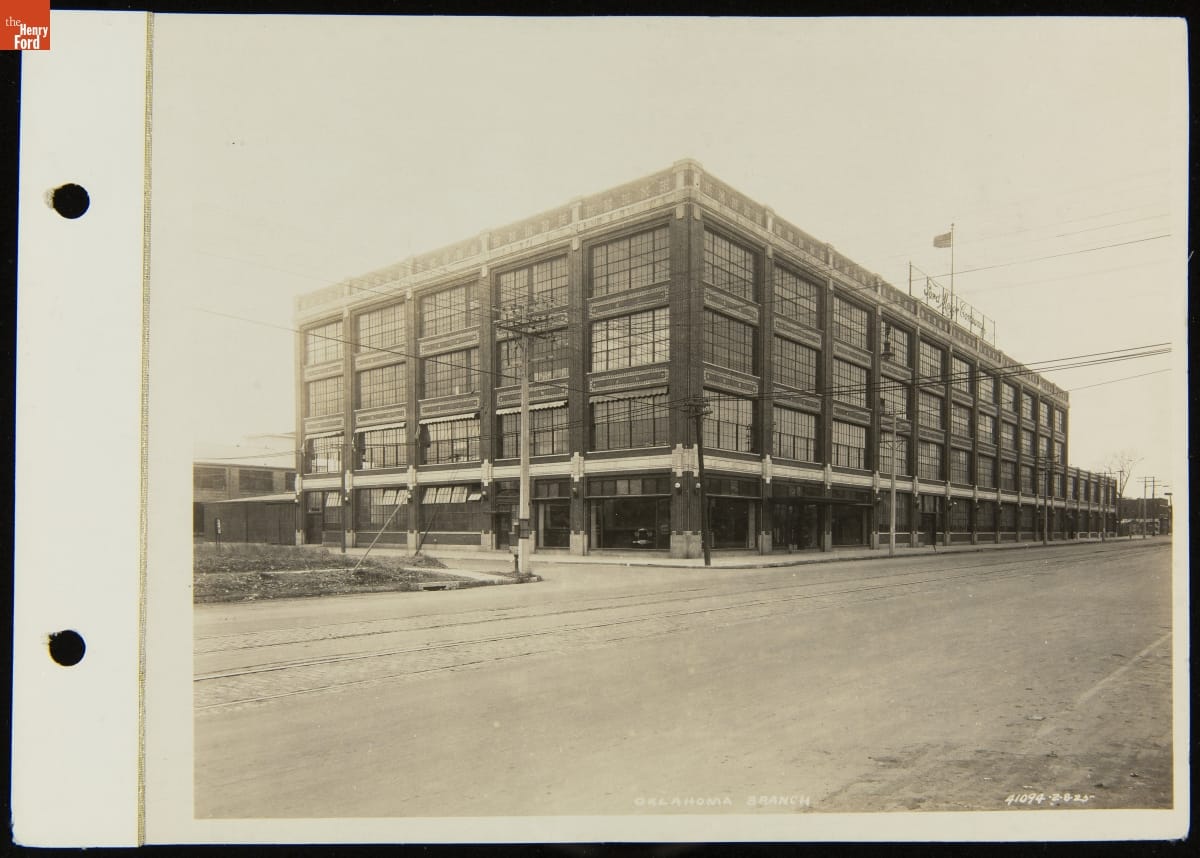
- February 08, 1925
- Collections - Artifact
Ford Motor Company Branch in Oklahoma City, Oklahoma, February 8, 1925
Starting in the early 1910s, Ford Motor Company opened domestic assembly plants throughout the United States. Assembling automobiles closer to regional markets reduced shipping costs -- parts were cheaper to ship than completed automobiles. Ford opened a four-story factory in Oklahoma City in 1916. Workers assembled Model Ts for customers in Oklahoma and parts of the surrounding states.
- Trade Card for Ariosa Coffee, Arbuckle Bros., "Indian Territory and Oklahoma," 1892 - As color printing gained momentum in the late 19th century, trade cards were a major means of advertising goods and services. Americans enjoyed and often saved the vibrant little advertisements found in product packages or distributed by local merchants. This trade card for Arbuckle Bros. Coffee Company provides information about its Ariosa coffee and features a colorful image in a series depicting the United States and its territories.
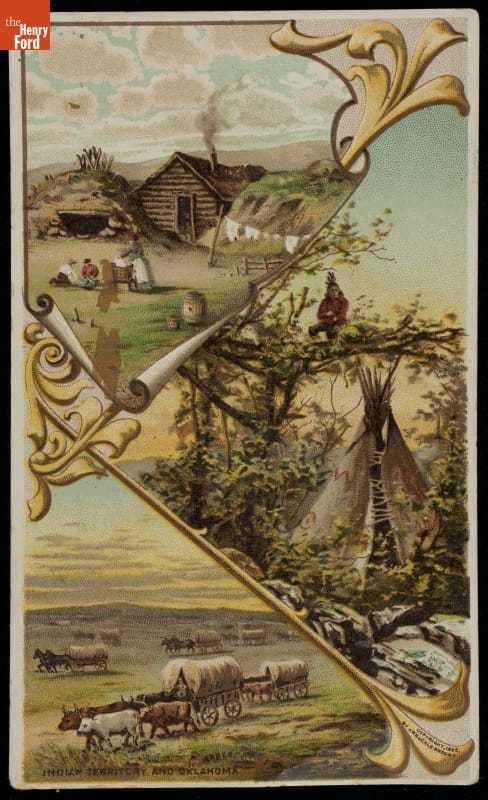
- 1892
- Collections - Artifact
Trade Card for Ariosa Coffee, Arbuckle Bros., "Indian Territory and Oklahoma," 1892
As color printing gained momentum in the late 19th century, trade cards were a major means of advertising goods and services. Americans enjoyed and often saved the vibrant little advertisements found in product packages or distributed by local merchants. This trade card for Arbuckle Bros. Coffee Company provides information about its Ariosa coffee and features a colorful image in a series depicting the United States and its territories.
- Circus Poster, Miller Brothers & Arlington 101 Ranch, 1913 -
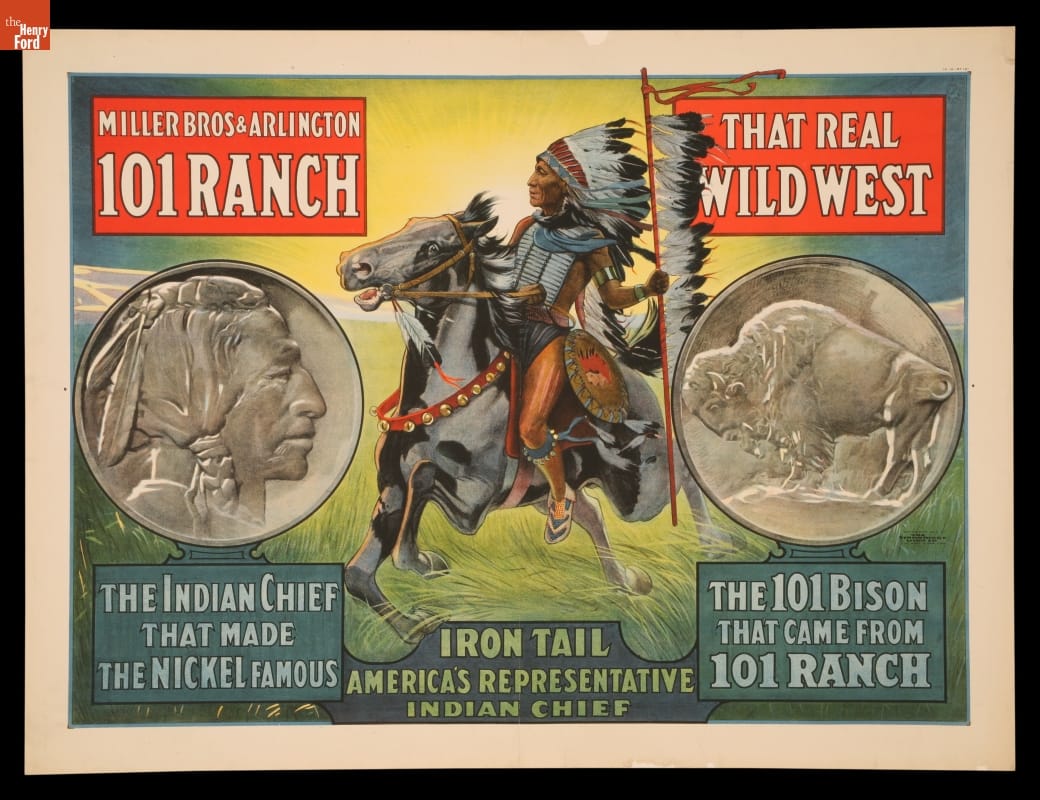
- 1913
- Collections - Artifact
Circus Poster, Miller Brothers & Arlington 101 Ranch, 1913
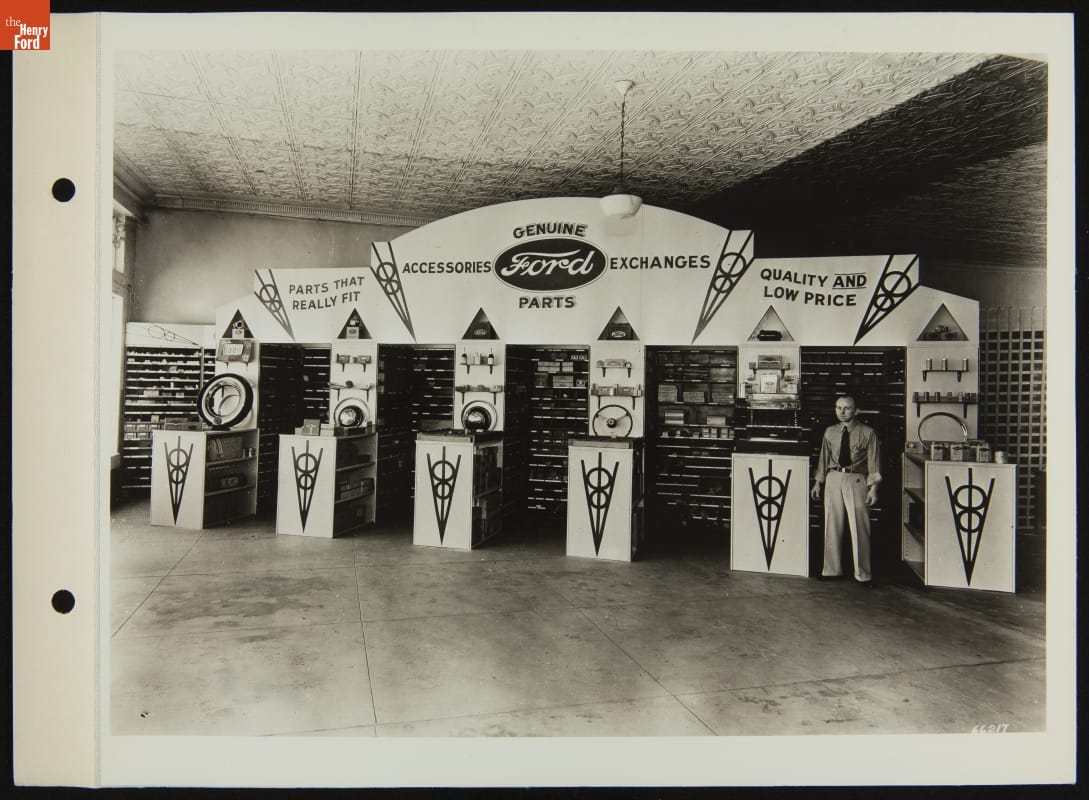
- Parts Department, McIntyre Bleustince Ford Dealership, Durant, Oklahoma, 1936 - Ford Motor Company inaugurated a system of competing dealership franchises in 1914. Dealers sold Ford vehicles, offered repair services, and stocked spare parts and automobile accessories. Dealership parts and service departments lured customers with displays and advertisements. The department also served as a reminder to potential car buyers that the dealership provided extra services after the sale.
- June 09, 1936
- Collections - Artifact
Parts Department, McIntyre Bleustince Ford Dealership, Durant, Oklahoma, 1936
Ford Motor Company inaugurated a system of competing dealership franchises in 1914. Dealers sold Ford vehicles, offered repair services, and stocked spare parts and automobile accessories. Dealership parts and service departments lured customers with displays and advertisements. The department also served as a reminder to potential car buyers that the dealership provided extra services after the sale.